
Fate
BY RALPH WALDO EMERSON
That you are fair or wise is vain,
Or strong, or rich, or generous;
You must have also the untaught strain
That sheds beauty on the rose.
There is a melody born of melody,
Which melts the world into a sea:
Toil could never compass it;
Art its height could never hit;
It came never out of wit;
But a music music-born
Well may Jove and Juno scorn.
Thy beauty, if it lack the fire
Which drives me mad with sweet desire,
What boots it? what the soldier’s mail,
Unless he conquer and prevail?
What all the goods thy pride which lift,
If thou pine for another’s gift?
Alas! that one is born in blight,
Victim of perpetual slight:
When thou lookest on his face,
Thy heart saith, “Brother, go thy ways!
None shall ask thee what thou doest,
Or care a rush for what thou knowest,
Or listen when thou repliest,
Or remember where thou liest,
Or how thy supper is sodden;”
And another is born
To make the sun forgotten.
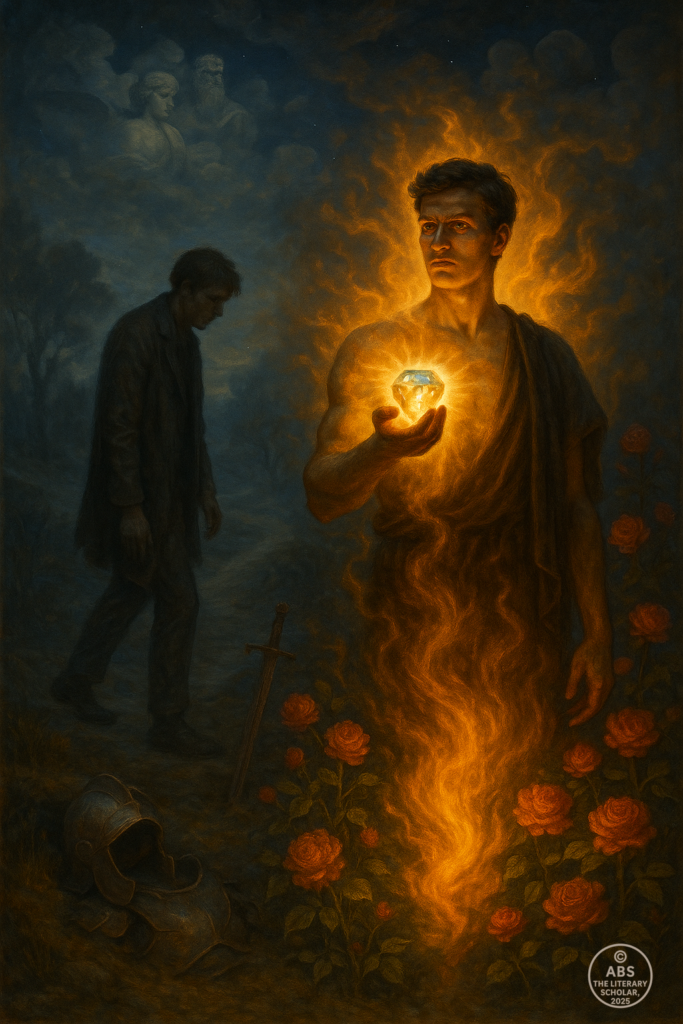
Surely he carries a talisman
Under his tongue;
Broad are his shoulders, and strong;
And his eye is scornful,
Threatening, and young.
I hold it of little matter
Whether your jewel be of pure water,
A rose diamond or a white,
But whether it dazzle me with light.
I care not how you are dressed,
In the coarsest or in the best;
Nor whether your name is base or brave;
Nor for the fashion of your behavior;
But whether you charm me,
Bid my bread feed and my fire warm me,
And dress up Nature in your favor.
One thing is forever good;
That one thing is Success, —
Dear to the Eumenides,
And to all the heavenly brood.
Who bides at home, nor looks abroad,
Carries the eagles, and masters the sword.
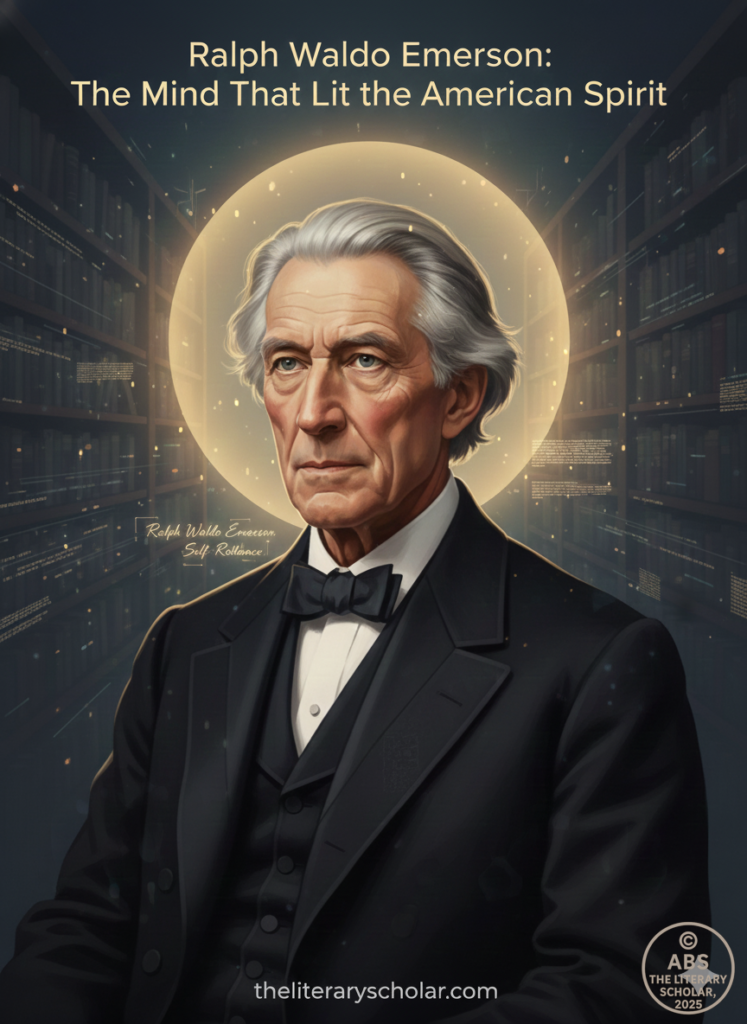
Ralph Waldo Emerson: Introduction
Ralph Waldo Emerson wasn’t just a poet. He was the guy who walked into nineteenth-century America, looked at its cultural insecurity, and basically said, “Stop copying Europe. Think for yourselves.” America listened.
Born in 1803 in Boston, Emerson grew into one of the most influential thinkers the country ever produced. He started as a Unitarian minister, walked away from the pulpit after a crisis of belief, and reinvented himself as a lecturer, philosopher, and writer. Most people struggle to change a job; Emerson changed the intellectual climate of a nation.
He became the central force behind Transcendentalism, the movement that insisted humans carry a divine spark, that intuition is sometimes smarter than logic, and that nature isn’t scenery; it’s a living text. The man could walk into a forest and come out with a philosophy. His essays Nature, Self-Reliance, and The American Scholar became the unofficial toolkits for anyone trying to grow a spine and a mind at the same time.
Emerson preached independence, self-trust, moral courage, and the idea that greatness has nothing to do with birth or class. Ironically, the polite, mild-looking New England thinker spent most of his life detonating old ideas.
He also mentored and influenced an entire generation of writers. Without Emerson, you don’t get Thoreau living in the woods, Whitman singing himself into epic poetry, or even Nietzsche sharpening his existential knives.
His poetry, though less famous than his essays, carries the same pulse: nature, individuality, fate, power, and the quiet, unstoppable force of character. “Fate,” the poem you’ve chosen, comes from the later phase of his writing, when he was wrestling with the limits of human will and the stubbornness of destiny. Emerson never sugarcoated it. He believed in human potential, yes, but he also knew life deals uneven cards.
He died in 1882 in Concord, Massachusetts, leaving behind shelves of essays, poems, journals, and a reputation as the thinker who made America intellectually self-aware.
If America ever had a philosophical backbone, Emerson helped build it.
Ralph Waldo Emerson: Complete Profile
Early Life
Born on May 25, 1803, in Boston.
Father died when Emerson was eight, leaving the family financially strained.
Studied at Harvard, then briefly taught school.
Entered the ministry but walked away after rejecting traditional communion rituals. That exit ticket changed American literature forever.
Career Shift: The Thinker Emerges
Leaving the church didn’t make him less spiritual; it made him allergic to intellectual confinement. He traveled to Europe, met Wordsworth, Coleridge, and Carlyle, and came home with a mind fully loaded.
He settled in Concord, Massachusetts, and became a public lecturer. His speaking was electric. People walked in expecting polite philosophy and walked out feeling personally challenged.
His essays turned into his true legacy. If you want a crash course on American selfhood, Emerson is your guy.
Major Works (The Ones That Actually Matter)
Essays
These are the pillars. They built the Emerson we quote today.
Nature (1836)
The “new American philosophy” starter pack. He basically tells everyone to stop treating nature like a museum and start listening to it.Self-Reliance (1841)
His most famous piece. If you’ve ever heard someone say, “Trust yourself,” they were accidentally quoting Emerson.The Over-Soul (1841)
A spiritual essay about the shared divine spark in humans. Not light reading, but powerful.The American Scholar (1837)
Delivered at Harvard. Oliver Wendell Holmes called it “America’s intellectual Declaration of Independence.”Experience (1844)
Emerson wrestling with grief, limits, and the uncomfortable truth that pain does not automatically produce wisdom.
Poetry
Not known for poetic polish, but known for philosophical punch.
“Brahma”
A metaphysical poem that made readers run for dictionaries.“Concord Hymn”
The famous line: “Here once the embattled farmers stood.” Written for a monument unveiling.“Threnody”
Written after the death of his five-year-old son, Waldo. His most emotionally naked poem.“Fate”
The poem we’re working on. Emerson’s late-life honesty about how willpower meets destiny. Spoiler: destiny holds more cards.
Books / Collections
Essays: First Series (1841)
Essays: Second Series (1844)
Representative Men (1850)
English Traits (1856)
The Conduct of Life (1860)
Society and Solitude (1870)
Letters and Social Aims (1875)
Influence
Mentor to Henry David Thoreau.
Literary compass for Walt Whitman.
Admired by Nietzsche, which tells you the man had intellectual weight.
Foundation stone of American Transcendentalism.
Early abolitionist.
Pioneer of the “think for yourself” tradition.
Personality and Legacy
Emerson looked like a calm New England gentleman but wrote like someone determined to crack open the human mind. His journals were massive. His house in Concord became a cultural magnet. His ideas shaped American literature, environmental thought, spirituality, and individualism.
He died in 1882, but let’s be honest—half the motivational posters on Earth still recycle his lines.
Summary of Ralph Waldo Emerson’s “Fate”
“Fate” is Emerson dropping the polite Transcendental halo and admitting a hard truth: life is not fair, and talent alone doesn’t guarantee anything. Some people are born with an invisible spark that opens doors, bends circumstances, and makes the world respond to them. Others, equally worthy, seem marked by neglect, overlooked no matter what they do. Emerson calls this difference a kind of innate “strain,” a natural charm or force that cannot be achieved through effort, learning, or good behavior. You either have it, or you don’t.
He argues that physical beauty, wealth, intelligence, or good manners mean nothing if a person lacks this inner fire—the energy that inspires desire, admiration, and influence. A person without it may wander unseen and unheard. Another person, born with it, shines so brightly that the world reorganizes itself around him.
But Emerson doesn’t stay in pessimism. He shifts to a practical and slightly ruthless conclusion: the world rewards success, not background or appearances. Whether your diamond is cheap or expensive matters less than whether it shines. Whether you are finely dressed or poor is irrelevant if you carry the force that captivates life itself.
In the end, Emerson makes a blunt claim: fortune favors the decisive. The ones who stay sheltered, passive, or afraid will never command life. Real power belongs to those who act, who venture, who “carry the eagles and master the sword.”
So the poem becomes a tough-love diagnosis of destiny:
Life is uneven. Raw force matters. Hidden charisma matters. Action matters. And success—however the world measures it—has its own magnetism that even the gods respect.
Line-by-Line Explanation of Emerson’s “Fate”
1. “That you are fair or wise is vain, / Or strong, or rich, or generous;”
Being beautiful, intelligent, strong, wealthy, or generous isn’t enough. These qualities alone don’t decide your destiny.
2. “You must have also the untaught strain / That sheds beauty on the rose.”
There is an innate, undefinable quality—call it charm, charisma, natural force—that makes someone truly powerful or admirable. It can’t be learned.
3. “There is a melody born of melody, / Which melts the world into a sea:”
Some people carry a natural harmony or presence that softens the world around them. It’s like a music deeper than skill.
4. “Toil could never compass it; / Art its height could never hit; / It came never out of wit;”
You can’t work for it, practice for it, or think your way into it. No effort produces this natural magic.
5. “But a music music-born / Well may Jove and Juno scorn.”
This natural gift is so pure that even the gods (Jove and Juno) might envy it or dismiss human attempts to imitate it.
The Question of Beauty and Power
6. “Thy beauty, if it lack the fire / Which drives me mad with sweet desire,”
Physical beauty without passion or energy behind it feels empty. It doesn’t move people.
7. “What boots it? what the soldier’s mail, / Unless he conquer and prevail?”
What’s the point of armor if the soldier never wins? Strength without results is pointless.
8. “What all the goods thy pride which lift, / If thou pine for another’s gift?”
If you have many advantages but constantly crave someone else’s talents or fate, your own gifts become useless.
The Two Types of People
9. “Alas! that one is born in blight, / Victim of perpetual slight:”
Some people seem born into misfortune and are ignored or undervalued no matter what they do.
10. “When thou lookest on his face, / Thy heart saith, ‘Brother, go thy ways!’”
When you see such a person, instinct almost tells you to move on—he doesn’t attract interest or attention.
11. “None shall ask thee what thou doest, / Or care a rush for what thou knowest,”
No one asks about his actions or knowledge. Society simply overlooks him.
12. “Or listen when thou repliest, / Or remember where thou liest, / Or how thy supper is sodden;”
No one listens to him, remembers him, or even cares how he survives. Brutal social reality.
13. “And another is born / To make the sun forgotten.”
Meanwhile, another person is born with such dazzling charm or power that he outshines everything around him.
The Charismatic Man
14. “Surely he carries a talisman / Under his tongue;”
He seems to possess a magical charm—perhaps through speech—that influences everyone.
15. “Broad are his shoulders, and strong; / And his eye is scornful, / Threatening, and young.”
He radiates strength, confidence, and a touch of danger. Youth, power, and attitude combine into natural leadership.
What Truly Matters
16. “I hold it of little matter / Whether your jewel be of pure water, / A rose diamond or a white,”
The type of jewel doesn’t matter. Quality is irrelevant unless it catches attention.
17. “But whether it dazzle me with light.”
If it shines, it matters. If it doesn’t, it’s forgotten.
18. “I care not how you are dressed, / In the coarsest or in the best;”
Appearance—rich or poor clothing—is irrelevant.
19. “Nor whether your name is base or brave; / Nor for the fashion of your behavior;”
Your social background and manners also don’t define your influence.
20. “But whether you charm me, / Bid my bread feed and my fire warm me,”
The real question: Do you bring vitality, inspiration, warmth, and usefulness to life?
21. “And dress up Nature in your favor.”
Do you make the world feel brighter just by being in it?
The Harsh Truth of Success
22. “One thing is forever good; / That one thing is Success,—”
Success is the ultimate currency. Society respects results more than intentions.
23. “Dear to the Eumenides, / And to all the heavenly brood.”
Even the gods respect success. Fate itself responds to those who achieve.
24. “Who bides at home, nor looks abroad, / Carries the eagles, and masters the sword.”
If you stay passive, fearful, or isolated, you never gain power.
Fate favors the bold—the ones who step out, act, and claim their place.
Critical Appreciation of Ralph Waldo Emerson’s “Fate”
Emerson’s Fate is one of his most mature, unsentimental poems. It stands at the crossroads of his philosophy—where the optimism of Transcendentalism collides with the cold, uneven realities of human life. The poem is compelling precisely because Emerson drops the comforting illusion that effort alone shapes destiny and instead acknowledges that some invisible forces—charisma, natural energy, inner fire—decide more than beauty, talent, or virtue ever can.
A Philosophical Shift
Earlier Emerson preached boundless self-reliance.
But in Fate, the older Emerson recognizes limits. Human potential exists, but so do constraints. Some people walk into the world with an innate magnetic quality, “the untaught strain,” a charm or force that no education or discipline can produce. Those without it often struggle in obscurity. This recognition marks an honest evolution in Emerson’s thought, making the poem a bridge between his idealism and a more sober realism.
The Two Fates
The poem contrasts two types of individuals:
The overlooked, unlucky, invisible human being
Born “in blight,” ignored regardless of merit. His words aren’t heard, his actions aren’t remembered, and life doesn’t open for him.The charismatic, fate-blessed individual
Born with a “talisman under his tongue,” carrying strength, confidence, and effortless influence. He “makes the sun forgotten.”
Emerson’s portrayal is blunt but psychologically accurate. Even today, some people enter a room and change it; others remain unnoticed despite equal intelligence or goodness. Emerson articulates this painful divide without apology.
Success as the Universal Law
One of the most provocative ideas in the poem is Emerson’s claim that “one thing is forever good; that one thing is Success.” This sounds harsh, but he doesn’t mean superficial material success. He means effectiveness—the ability to act, to create impact, to shape circumstances.
Emerson suggests that power is not in status, wealth, birth, or beauty, but in a mysterious inner radiance that translates into real-world outcomes.
Even the gods, he says, respect success. This is mythological language for an uncomfortable truth: the universe seems to cooperate with those who move boldly.
Artistry of Expression
The poem is not lush or ornate; it is firm, rhythmic, and deliberate. Emerson writes like someone who has stopped trying to impress and instead wants to reveal. There is music in his lines, but it is a stern music—steady, philosophical, and reflective.
His contrasts are sharp:
beauty vs. fire
armor vs. victory
jewels vs. radiance
clothing vs. charisma
background vs. impact
Through these oppositions, he dismantles superficial measures of worth and replaces them with a deeper principle: inner force rules the outer world.
Modern Relevance
The poem still hits hard today. We live in an age obsessed with talent, credentials, aesthetics, and image. Emerson reminds us that none of that matters unless backed by an inner spark—drive, passion, intensity, authenticity. The world responds to energy, not labels.
In this sense, Fate is less a poem of resignation and more a poem of recognition. Emerson is not telling us to surrender to destiny; he is telling us to understand what destiny actually demands.
Final Evaluation
Fate is a remarkable poem because it refuses both cynicism and naïveté.
It faces the unevenness of life squarely, acknowledges the mysterious power some people carry, and still upholds human action as the decisive force. It is one of the rare works where Emerson’s mystical faith in the individual merges with a clear-eyed realism about the limitations imposed by birth and circumstance.
This duality makes Fate one of Emerson’s most honest and intellectually mature poems—uncomfortable, insightful, and enduring.
THEMES IN “FATE”
1. The Inequality of Human Destiny
Emerson confronts the uncomfortable truth that people are not born equal in terms of charm, opportunities, or natural advantage. Some are overlooked despite effort; others shine without trying. Fate is uneven, and Emerson does not sugarcoat it.
2. The Power of Innate Genius or Fire
The “untaught strain,” the “talisman,” the “music-born music”—these are Emerson’s metaphors for natural charisma or inner force. It’s not talent you learn; it’s a force you radiate. This innate fire decides more than beauty, wealth, or intellect.
3. The Limitations of External Qualities
Beauty, strength, wealth, fine clothing, noble birth—none of these guarantee influence. Without inner power, all these qualities are empty shells. Emerson rejects surface-level indicators of greatness.
4. Success as the Ultimate Measure of Impact
Emerson treats “Success” not as money or status, but as effectiveness—one’s ability to shape life rather than be shaped by it. The gods themselves, he says, admire decisive achievement.
5. Fate vs. Free Will
The poem presents tension between destiny and personal effort. Emerson knows some are born with unfair advantages, yet he still insists that bold action can overcome passivity. Fate sets the stage; individuals still choose whether to step forward or hide.
6. Society’s Harsh Judgment
Society listens to some voices and ignores others—not because of value, but because of presence. Emerson captures how cruel social perception can be. Some lives remain invisible simply because they lack that magnetic spark.
7. Nature as a Mirror of Human Potential
Emerson often uses nature symbolically. The rose, the jewel, the fire—all point to natural brilliance that shines without instruction. Nature becomes proof that true excellence is organic, not manufactured.
STYLISTIC DEVICES IN “FATE”
1. Metaphor
Emerson uses powerful metaphors to simplify abstract ideas:
“Untaught strain” = natural talent or charisma
“Talisman under his tongue” = persuasive power
“Music-born music” = innate harmony or charm
“Make the sun forgotten” = extraordinary brilliance
These metaphors translate psychological realities into vivid images.
2. Contrast and Juxtaposition
He constantly contrasts:
gifted vs. overlooked
beauty vs. fire
armor vs. victory
clothing vs. charisma
This sharpens the poem’s argument and makes its logic feel undeniable.
3. Mythological Allusion
References to Jove, Juno, and Eumenides root the poem in classical mythology. These allusions magnify Emerson’s claims by suggesting that even gods respect natural force and success.
4. Symbolism
The jewel, the rose, the fire, the sword—each symbolizes a deeper quality:
Jewel = value
Light = influence
Fire = passion
Sword = power and conquest
Emerson uses symbols not decoratively but argumentatively.
5. Irony
There’s a subtle irony throughout: the philosopher who spent his life preaching self-reliance now admits that some people simply start the race ahead. Emerson acknowledges the discrepancy without losing faith in human potential.
6. Rhythmic and Musical Language
The poem reads like measured prose, but with internal rhythms and musical patterns that underline its themes. Words like “strain,” “melody,” “music-born” tie the idea of inner harmony to the sound of the poem itself.
7. Direct Address
Emerson repeatedly addresses the reader (“thy beauty,” “under his tongue,” “whether you charm me”).
This creates immediacy and forces us to confront our own assumptions about power and success.
8. Imagery
He uses vivid sensory imagery to anchor the abstract:
“Broad are his shoulders”
“His eye is scornful”
“Dress up Nature in your favor”
These images transform philosophical ideas into concrete pictures.
PHASE 1: TEN SHORT ANSWERS (2–3 LINES EACH)
1. What central idea does Emerson explore in “Fate”?
He explores the tension between destiny and individual effort. Emerson admits that natural advantages shape life, yet insists that decisive action still holds power.
2. What does Emerson mean by the “untaught strain”?
It refers to innate charisma or natural genius that cannot be learned. It’s an inner spark that makes a person influential.
3. Why does Emerson say beauty is useless without “fire”?
Because beauty without passion or energy has no impact. Fire is what inspires, moves, or compels others.
4. How does the poem contrast two types of individuals?
One is born overlooked and ignored, while the other possesses a natural magnetism that draws attention and success effortlessly.
5. What does the “talisman under his tongue” symbolize?
It symbolizes persuasive power or charm in speech, the ability to influence people simply by talking.
6. Why does Emerson dismiss wealth, clothing, or social status?
Because external qualities don’t define real influence. What matters is whether someone can charm, warm, or energize life.
7. What is Emerson’s view of success in the poem?
Success is the ultimate measure of effectiveness. It’s respected universally—even, symbolically, by the gods.
8. How does Emerson portray society’s treatment of the unlucky?
Society ignores them: no one listens, remembers, or values their struggle. They remain invisible despite effort.
9. What role does nature play in the poem’s symbolism?
Nature represents organic brilliance—roses, jewels, fire—all symbols of natural, not manufactured, excellence.
10. What message does Emerson give at the end of the poem?
Life rewards action, not passivity. Those who step out boldly “carry the eagles and master the sword.”
Five long answers (150–200 words each).
1. Explain the central conflict between destiny and individual effort in Emerson’s “Fate.”
In “Fate,” Emerson confronts a dilemma that runs through all of human life: how much control do we truly have over our circumstances? Earlier in his career, he championed self-reliance and the boundless potential of the individual, but here he acknowledges that destiny sets uneven terms from the start. Some people are born with an “untaught strain,” a natural charisma or force that opens doors without effort. Others, equally deserving, are marginalized from birth. Emerson describes these disparities bluntly, showing how society instinctively responds to charisma while overlooking quieter strengths. Yet he does not surrender to fatalism. Even while recognizing the limits imposed by birth, temperament, or circumstance, he insists that individual effort still matters. Boldness, action, and willpower can counterbalance destiny’s unfairness. The poem concludes by praising success not as material wealth but as the ability to step forward decisively. Fate may distribute advantages unevenly, but human agency still determines who “masters the sword.” Thus, the poem presents a balanced, honest view: destiny shapes the conditions, but the individual shapes the outcome.
2. Discuss Emerson’s treatment of innate qualities versus external attributes in the poem.
Emerson makes a sharp distinction between inner qualities and external attributes in “Fate.” He dismisses beauty, wealth, noble birth, elegant clothing, or refined behavior as superficial markers of worth. These are advantages society often celebrates, but Emerson argues they mean nothing without the inner fire that gives life energy and direction. This inner force—what he calls the “untaught strain”—is a kind of natural charisma or radiance that can’t be learned or manufactured. Even jewels, roses, and armor symbolize this difference: external brilliance is meaningless unless backed by real power, just as armor is useless without victory. By contrast, the individual with innate genius or presence seems almost enchanted, carrying a “talisman under his tongue.” This charm enables him to inspire, persuade, and command attention effortlessly. Emerson’s argument is unapologetically merit-based: inner force determines influence. External appearances may impress briefly, but only innate energy shapes destiny. Thus, the poem elevates authenticity and natural power above the shallow decorations society often mistakes for greatness.
3. How does Emerson portray society’s treatment of the overlooked or “blighted” individual?
Emerson is brutally honest about how society treats those who lack natural charisma or outward brilliance. The “blighted” individual is ignored regardless of knowledge, effort, or intelligence. People neither ask about his life nor care about his abilities; they don’t listen when he speaks or remember him afterward. Emerson emphasizes this social invisibility through a series of dismissive lines—no one cares what he knows, how he lives, or even how he eats. This is not moral judgment but sociological truth: society gravitates instinctively toward confidence and energy, leaving the quiet or unfortunate person behind. The poem doesn’t romanticize the neglected; it exposes the unfairness. Emerson seems almost sorrowful as he acknowledges that goodness or virtue alone does not guarantee attention. Yet this depiction serves a purpose. By showing the harsh reality, he underscores the necessity of inner strength and decisive action. Emerson’s portrayal is not meant to discourage but to awaken: life is not a fair contest, and self-discovery includes understanding how the world responds to presence—or the lack of it.
4. Examine Emerson’s use of symbolism in developing the poem’s message.
Symbolism is the backbone of Emerson’s argument in “Fate.” He uses the rose to represent natural, effortless beauty—the kind that radiates without instruction. The jewel symbolizes value, yet Emerson insists its worth lies only in its ability to shine, reinforcing that impact matters more than origins. Fire embodies passion, energy, and transformative force; beauty without fire is inert. The talisman symbolizes charismatic speech or persuasive presence, suggesting that some individuals possess almost magical influence. The sword and eagles at the poem’s end symbolize victory, power, and active leadership. These symbols are not decorative; they clarify Emerson’s central thesis that destiny favors those with inner force. By grounding abstract philosophical arguments in tangible images, Emerson makes his ideas immediately accessible. The reader sees the difference between a dull jewel and a dazzling one, between armor and actual victory. Through symbolism, Emerson transforms philosophical reflection into vivid experience, strengthening the poem’s emotional and intellectual impact.
5. What role does success play in the philosophical framework of the poem?
Success, for Emerson, is not wealth, applause, or social status. It is effectiveness—the ability to create real impact in the world. In “Fate,” he places success at the top of the moral hierarchy, calling it “forever good” and “dear to the Eumenides,” suggesting that even destiny’s guardians respect those who achieve. Success becomes the outward sign of inner strength. Emerson argues that action is essential: those who stay passive or fearful “bide at home” and therefore never command the forces of life. Success is portrayed as a combination of innate fire and bold engagement with the world. It is both the reward of natural gifts and the product of will. Emerson’s emphasis is not materialistic; it is existential. Success means fulfilling one’s potential by moving decisively rather than hiding from challenges. In this philosophical framework, success isn’t luck—it is the visible form of inner force meeting opportunity. By ending the poem on this note, Emerson shifts the reader from fatalistic resignation to empowered responsibility.
PHASE 3: TEN 5-MARK QUESTIONS WITH ANSWERS
1. How does Emerson reconcile the ideas of fate and free will in the poem “Fate”?
Emerson acknowledges that fate distributes advantages unequally—some are born with charm or strength, while others are overlooked. However, he does not embrace fatalism. He argues that although innate conditions shape one’s starting point, individual action still determines final outcomes. His praise of “Success” at the end implies that willpower, energy, and decisive engagement with life allow a person to rise above limitations. Fate sets the terms, but free will decides how those terms are played.
2. What is the significance of the “untaught strain” in the poem?
The “untaught strain” represents innate charisma, natural talent, or an inner radiance that cannot be taught, practiced, or acquired through effort. Emerson suggests that this inner spark is more powerful than beauty, wealth, or learning, because it influences how the world responds to a person. This idea illustrates the poem’s central theme: natural force shapes destiny more deeply than external advantages.
3. How does Emerson portray society’s response to the “blighted” individual?
Emerson shows society as harshly indifferent. The “blighted” person is ignored despite effort or intelligence; no one asks after him, listens to him, or values his contributions. His life passes unnoticed. This portrayal highlights the brutal social reality Emerson wants readers to face: merit alone does not guarantee recognition. Influence requires inner presence, not just outer virtue.
4. Explain the function of mythological allusions in the poem.
References to Jove, Juno, and the Eumenides elevate Emerson’s arguments to a universal scale. By invoking classical deities, he suggests that even mythic powers respect natural brilliance and success. These allusions add authority and depth, implying that the rules governing destiny are ancient and cosmic, not merely social or psychological.
5. Discuss the contrast Emerson makes between appearance and inner power.
Emerson dismisses beauty, clothing, lineage, and social behavior as superficial. What truly matters is the inner power that radiates through personality and action. Without this fire, external advantages are meaningless. With it, even humble origins can become powerful. The contrast reinforces his belief that real influence comes from within, not from surface-level indicators.
6. Why does Emerson compare certain individuals to jewels and roses?
Jewels and roses symbolize natural brilliance—qualities that shine or bloom without instruction. Emerson uses them to contrast innate excellence with artificial beauty or manufactured status. A jewel matters only if it dazzles; a rose is admired because of its inherent charm. These symbols support his argument that true greatness arises from organic inner force.
7. What does the ending of the poem suggest about human action?
The ending emphasizes decisiveness and engagement with life. Emerson warns that those who stay passive or afraid “bide at home” and never gain power. By contrast, those who act boldly “carry the eagles and master the sword.” The message is clear: action transforms potential into success, even within the constraints of fate.
8. How does Emerson depict the charismatic or fate-blessed individual?
This person seems almost enchanted—carrying a “talisman,” radiating strength, and possessing a youthful, commanding gaze. His presence is so powerful that he can “make the sun forgotten.” Emerson uses exaggerated imagery to underline how some individuals naturally dominate their environments through inner vitality.
9. What role does imagery play in reinforcing the poem’s philosophical themes?
Imagery anchors abstract ideas—charisma, destiny, influence—into vivid physical forms. Fire, jewels, roses, armor, shoulders, and swords create a sensory landscape that translates Emerson’s philosophy into concrete terms. This makes the ideas not just understandable but memorable, strengthening the poem’s impact.
10. In what way does “Fate” reflect a shift in Emerson’s philosophical outlook?
“Fate” marks Emerson’s mature recognition that life is not wholly shapeable by will. Unlike his early optimism that emphasized individual potential, this poem acknowledges limits imposed by birth, temperament, and circumstance. Yet Emerson does not abandon self-reliance. Instead, he blends realism with idealism: fate constrains, but human will still determines victory.
Higher-Level Critical Discussion of Emerson’s “Fate”
Ralph Waldo Emerson’s “Fate” occupies a unique and complicated place within his body of work because it exposes a philosophical tension Emerson himself spent a lifetime negotiating. On one hand, Emerson is the great preacher of self-reliance, insisting that the individual holds immense creative and moral power. On the other hand, “Fate” reveals his awareness of something more primal, more uncontrollable—forces that precede choice and shape human possibility. The poem stands as Emerson’s attempt to reconcile transcendental idealism with the sobering realism of lived experience.
The central claim of the poem is that human destiny is never a blank slate. People enter the world with different natural endowments: a mysterious “untaught strain,” a charisma that makes one individual shine while another fades unnoticed. This inequality is not moral; it is structural. Emerson is not romanticizing the gifted nor condemning the ungifted. He is simply acknowledging the observable truth that some people possess an inexplicable magnetism—what modern psychology might call presence, aura, or emotional intelligence. Long before contemporary discussions of privilege or personality psychology, Emerson recognized these disparities as elemental components of fate.
Yet Emerson refuses to collapse into fatalism. While he admits that nature distributes gifts unevenly and that society instinctively responds to charisma, he also insists that human agency still matters. The poem’s final assertion—that success belongs to those who step out of passive comfort—echoes his lifelong commitment to action. Emerson suggests that while fate may set the boundaries, will determines the movement within those boundaries. This synthesis of determinism and freedom is the poem’s intellectual achievement: fate creates structure; action creates meaning.
Stylistically, the poem reinforces its philosophical message through its contrast-driven construction. Roses, jewels, fire, armor, talismans—these symbols juxtapose natural brilliance with artificial equivalents. Emerson’s argument emerges through imagery rather than abstract exposition. The individual with inner fire conquers; the one with mere decoration vanishes. Even the use of mythology (Jove, Juno, the Eumenides) is strategic, elevating the discussion from personal psychology to universal law. Emerson implies that the principles governing success and obscurity are as ancient as the cosmos itself.
Perhaps the poem’s most provocative element is its unapologetic valorization of “Success.” Emerson does not define success as wealth or popularity but as effectiveness: the capacity to turn potential into reality. This redefines success as an existential triumph rather than a social reward. It is the outward sign that inner force has met the world without flinching.
In the end, “Fate” reveals Emerson at his most honest and complex. It neither flatters human potential nor denies it. Instead, it invites readers into a mature understanding: life is unequal, gifts differ, circumstances shape us, but the will remains sovereign within its sphere. Fate may set the conditions, but character determines the outcome.

Emerson wrote “Fate” because age had stripped away his earlier idealism and forced him to confront life’s uneven architecture. After decades of preaching self-reliance, he could no longer ignore the undeniable truth he saw in people around him: talent is not evenly distributed, charisma cannot be taught, and society instinctively favors some while overlooking others. The poem is Emerson’s attempt to reconcile this unromantic reality with his lifelong belief in human potential. He wasn’t abandoning optimism; he was upgrading it. “Fate” acknowledges the boundaries nature imposes, but it also insists that within those boundaries, human will still matters. Success belongs to those who act, who dare, who step forward. Emerson wrote the poem to admit the limits of destiny while reminding us that the sword is mastered only by those who pick it up.
Share this post / Spread the witty word / Let the echo wander / Bookmark the brilliance