
Poet’s Introduction — Ralph Waldo Emerson
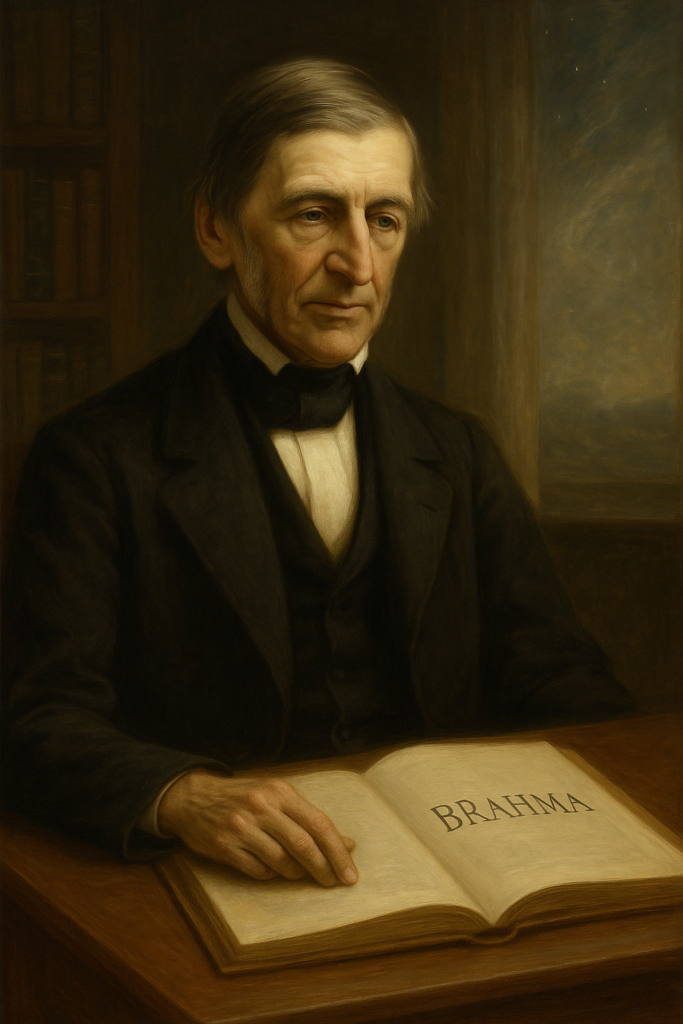
Ralph Waldo Emerson (1803–1882) was one of the most influential American thinkers, poets, and essayists of the nineteenth century. He is best known as the leading voice of American Transcendentalism, a philosophical and literary movement that emphasized self-reliance, intuition, the divine presence in nature, and the spiritual unity of all existence. Emerson believed that truth is not inherited from tradition or institutions but discovered inwardly through personal insight.
Originally trained as a Unitarian minister, Emerson gradually broke away from organized religion, finding it restrictive and spiritually insufficient. His resignation from the pulpit marked a turning point, after which he devoted himself to writing, lecturing, and philosophical exploration. His landmark essay Nature (1836) laid the foundation for Transcendentalist thought, followed by influential works such as Self-Reliance, The Over-Soul, and The American Scholar.
As a poet, Emerson was deeply philosophical. His poetry often reads like condensed metaphysics, challenging readers to think rather than feel alone. He drew heavily from Eastern philosophies, particularly Hinduism and the Upanishads, integrating ideas of unity, non-duality, and eternal spirit into Western literary expression. The poem “Brahma” is a direct reflection of this intellectual fusion, presenting Emerson not merely as a poet but as a thinker exploring the universal soul beyond life, death, and opposites.
Step 2: Background of the Poem “Brahma”
“Brahma” was written by Ralph Waldo Emerson in 1856 and later included in his collection Poems (1857). At the time, Emerson was deeply engaged with Eastern philosophy, especially the Hindu scriptures—the Upanishads, the Bhagavad Gita, and the concept of Vedanta. These texts profoundly influenced his thinking about the nature of reality, the soul, and the illusion of duality.
The title “Brahma” refers not to the Hindu creator-god alone but to Brahman, the supreme, eternal, and impersonal reality in Vedantic philosophy. Brahman is the ultimate truth—formless, timeless, and beyond human distinctions such as life and death, good and evil, victory and defeat. Emerson adopts this voice and lets Brahma itself speak in the poem.
When the poem was first published, many American readers found it confusing, abstract, and even unsettling. The idea that the killer and the killed are the same, or that shame and fame are equal, directly challenged Western moral and religious assumptions. Emerson was deliberately provocative. He intended to unsettle conventional thinking and force readers to confront a higher spiritual logic.
“Brahma” reflects Emerson’s belief that truth lies beyond opposites, beyond time, and beyond human judgment. The poem is not meant to comfort; it is meant to awaken. It stands as one of the clearest examples of Emerson’s attempt to merge Eastern metaphysics with Western poetic form, making it a landmark in American philosophical poetry.
Detailed Summary of “Brahma” by Ralph Waldo Emerson
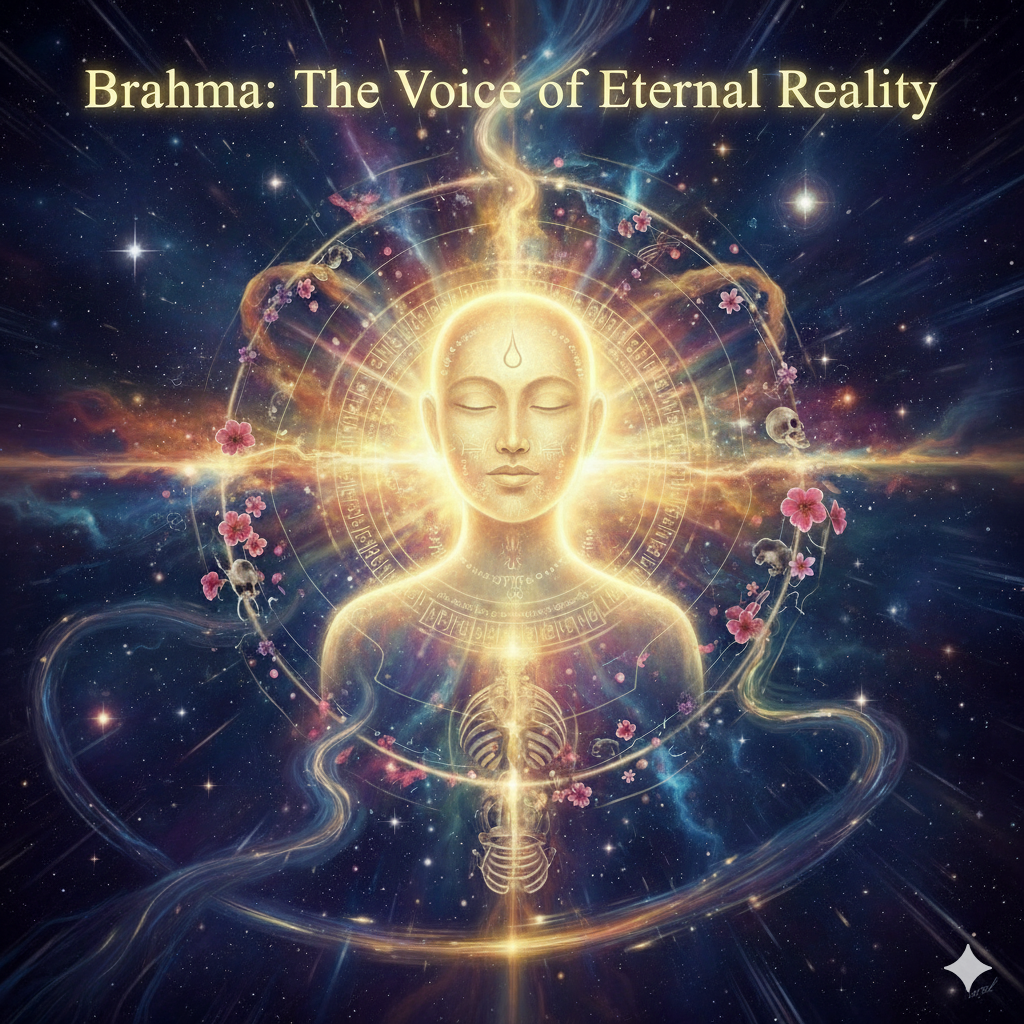
“Brahma” is a short but intensely philosophical poem in which Ralph Waldo Emerson presents the voice of the supreme, eternal reality known in Hindu philosophy as Brahman. The poem speaks not from a human perspective but from the viewpoint of the Absolute. Through this voice, Emerson challenges ordinary human ideas about life and death, good and evil, action and consequence, and even religion itself.
The poem opens by addressing one of humanity’s most basic assumptions: that killing ends life and being killed ends existence. Brahma declares that both the slayer and the slain misunderstand reality. In the spiritual order that Brahma represents, there is no true killing and no true death. Life does not end, nor is it destroyed by violence. What humans perceive as death is merely a transformation. Brahma moves, passes, and turns again, suggesting the eternal cycle of existence. This reflects the Vedantic idea that the soul is immortal and unaffected by physical destruction. Emerson uses this opening to immediately unsettle the reader and force a reconsideration of the meaning of death.
In the second stanza, Brahma goes further by dissolving the human habit of dividing reality into opposites. Distance and nearness lose meaning. What is forgotten or vanished still exists in Brahma’s consciousness. Light and shadow, which symbolize good and evil or knowledge and ignorance, are equal. Even gods who are no longer worshipped remain present to Brahma. Shame and fame, which govern human pride and fear, are revealed as meaningless distinctions. From the perspective of the Absolute, human judgments do not matter. All things are part of the same eternal unity.
The third stanza deepens this idea by asserting that Brahma exists even in the act of denial. Those who ignore or reject Brahma misunderstand existence because nothing exists outside the Absolute. When people believe they have escaped or rejected the divine, Brahma is still present as the very power that allows their movement and thought. Emerson expresses this paradox through the striking line that Brahma is both the doubter and the doubt. Faith and skepticism are not opposites here but expressions of the same ultimate reality. Even religious rituals and hymns are not separate from Brahma. The divine is present in the hymn sung by the Brahmin and in the questioning mind of the skeptic alike.
In the final stanza, Emerson addresses spiritual ambition and religious striving. Even the strongest gods long to reach Brahma’s dwelling, but they strive in vain. This suggests that power, status, and even divine rank are insufficient to realize ultimate truth. The sacred Seven, a reference to revered figures or celestial beings, also fail to attain Brahma through effort alone. In contrast, Emerson praises the humble seeker. The meek lover of the good, the one who seeks truth without pride or desire for reward, is capable of finding Brahma. This seeker must turn away from heaven itself, meaning that attachment to reward, salvation, or even religious success must be abandoned. True spiritual realization requires the surrender of desire, ambition, and ego.
Throughout the poem, Emerson presents Brahma as timeless, omnipresent, and all encompassing. Nothing exists outside it. All opposites collapse into unity. Life and death, action and inaction, belief and doubt, virtue and vice all dissolve into a single spiritual reality. The poem rejects moral simplification and sentimental religion. It insists on a deeper, more demanding vision of truth.
The tone of the poem is calm, authoritative, and impersonal. Brahma does not argue or persuade. It simply states what is. This reinforces the idea that ultimate truth does not depend on human approval or understanding. Emerson deliberately avoids emotional appeal. The poem requires intellectual and spiritual engagement rather than sympathy.
In essence, “Brahma” is Emerson’s poetic expression of non dualism. It teaches that reality is one, indivisible, and eternal. Human suffering arises from ignorance of this unity. By adopting the voice of Brahma, Emerson asks the reader to step beyond ordinary perception and glimpse existence as a whole. The poem does not offer comfort in the traditional sense. Instead, it offers liberation through understanding. It urges readers to abandon narrow perspectives and recognize the eternal presence that underlies all change.
“Brahma” stands as one of Emerson’s most concentrated philosophical poems. In a few tightly controlled stanzas, he compresses ideas drawn from the Upanishads and Vedantic philosophy into English verse. The result is a poem that challenges, provokes, and continues to demand careful thought. It is not a poem to be read quickly, but one to be contemplated, returning again and again to its subtle vision of reality.
Line-by-Line Explanation of “Brahma” by Ralph Waldo Emerson
“If the red slayer think he slays,”
Emerson begins by referring to the killer, symbolized as the “red slayer,” red suggesting blood and violence. Brahma states that the person who believes he truly kills is mistaken.
“Or if the slain think he is slain,”
Similarly, the person who believes he has been killed also misunderstands reality. Death, in the spiritual sense, is an illusion.
“They know not well the subtle ways / I keep, and pass, and turn again.”
Both the killer and the killed fail to understand the subtle workings of Brahma. Life moves in cycles. The soul passes from one form to another and returns, untouched by physical destruction.
“Far or forgot to me is near;”
Distance and absence have no meaning to Brahma. What humans consider lost or forgotten still exists within the Absolute.
“Shadow and sunlight are the same;”
Good and evil, ignorance and knowledge, joy and sorrow are not opposites to Brahma. They are equal aspects of one reality.
“The vanished gods to me appear;”
Even gods who are no longer worshipped or remembered continue to exist in Brahma’s eternal consciousness.
“And one to me are shame and fame.”
Human concepts of honor and disgrace have no value at the level of absolute truth. Both dissolve into unity.
“They reckon ill who leave me out;”
Those who ignore Brahma misunderstand life and existence. Any worldview that excludes the Absolute is incomplete.
“When me they fly, I am the wings;”
Even when people try to escape or deny Brahma, they do so using Brahma’s own power. The divine is the force behind all action.
“I am the doubter and the doubt,”
Brahma exists even in skepticism. Questioning and disbelief are not outside the divine but are part of it.
“I am the hymn the Brahmin sings.”
Brahma is also present in religious devotion and ritual. Faith and doubt are equally expressions of the same reality.
“The strong gods pine for my abode,”
Even powerful gods desire union with Brahma. This shows that divine rank does not guarantee ultimate realization.
“And pine in vain the sacred Seven;”
The sacred Seven, possibly referring to revered sages or celestial beings, also fail to reach Brahma through effort alone.
“But thou, meek lover of the good!”
Here Brahma addresses the humble seeker. Spiritual truth is accessible to those who seek goodness without pride.
“Find me, and turn thy back on heaven.”
True realization requires abandoning attachment to reward, paradise, or even conventional religious goals. One must move beyond heaven itself to attain Brahma.
Overall Explanation
Through each line, Emerson dismantles human assumptions about death, morality, religion, and divinity. By speaking as Brahma, he presents a non-dual vision where all opposites merge into one eternal truth. The poem insists that ultimate reality cannot be reached through fear, ambition, or ritual alone, but through humility, understanding, and inner awakening.
Themes of “Brahma” by Ralph Waldo Emerson
1. Non-Duality and the Unity of Existence
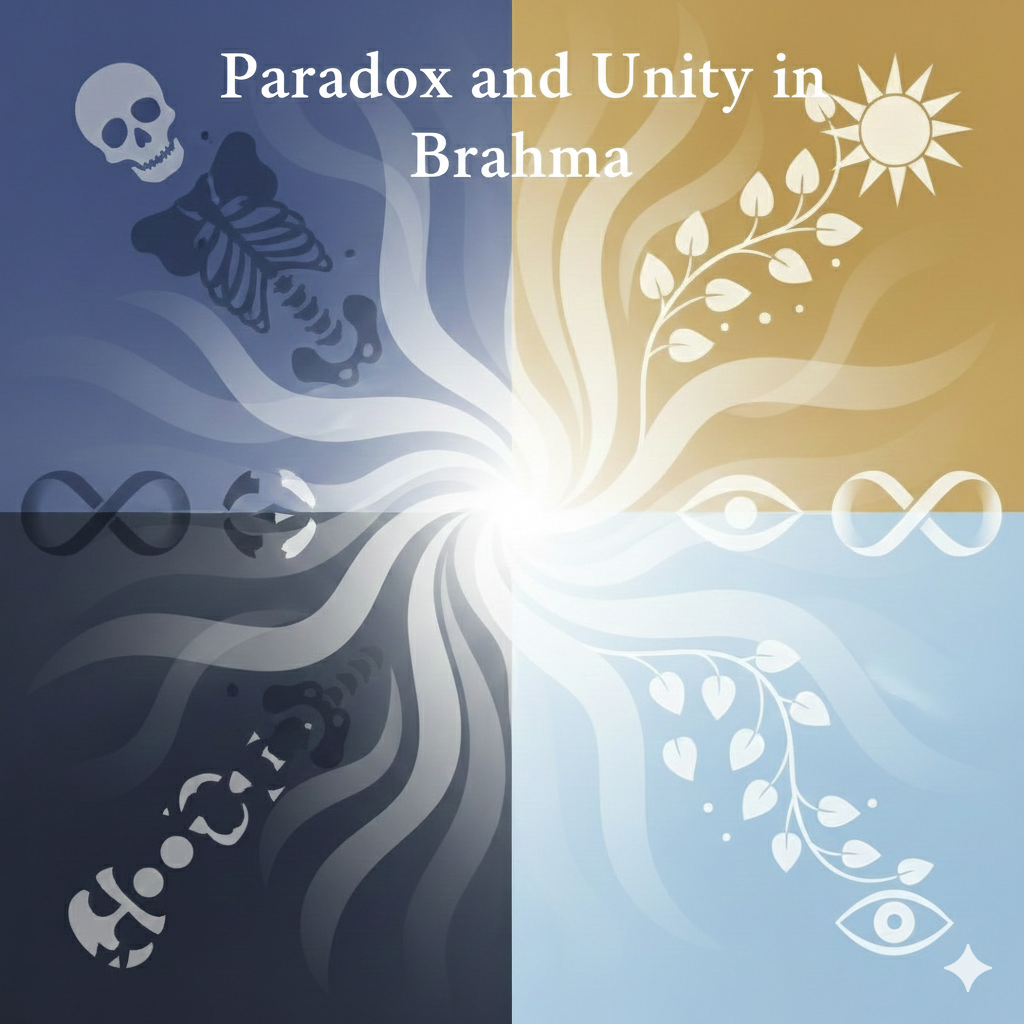
The most dominant theme of “Brahma” is non-duality, drawn directly from Vedantic philosophy. Emerson presents reality as a single, indivisible whole where all apparent opposites dissolve. Life and death, good and evil, action and inaction are not separate realities but different expressions of the same eternal truth.
“Shadow and sunlight are the same;
And one to me are shame and fame.”
Here, Emerson denies all human divisions. What the human mind separates, Brahma unites. This theme challenges the reader to move beyond binary thinking and recognize the oneness underlying all existence.
2. Illusion of Death
Another central theme is the illusory nature of death. Emerson rejects the idea that death is an end. From Brahma’s perspective, nothing is destroyed; existence simply changes form.
“If the red slayer think he slays,
Or if the slain think he is slain,
They know not well the subtle ways
I keep, and pass, and turn again.”
Death is presented as misunderstanding. The soul continues its journey, untouched by violence or physical extinction. This idea reflects the Upanishadic belief in the immortality of the soul.
3. Transcendence of Moral Judgments
Human ideas of right and wrong, honor and disgrace, praise and blame have no meaning at the level of absolute reality. Brahma exists beyond moral categories.
“And one to me are shame and fame.”
Emerson does not deny ethics at the human level, but he insists that moral distinctions disappear when viewed from the perspective of the eternal. This theme unsettles readers because it challenges deeply rooted moral assumptions.
4. Divine Immanence
The poem strongly asserts that the divine is present everywhere and in everything, including belief, doubt, action, and resistance. Nothing exists outside Brahma.
“When me they fly, I am the wings;
I am the doubter and the doubt.”
Even rejection of the divine occurs within the divine. Doubt does not negate Brahma; it confirms Brahma’s omnipresence. Emerson presents a universe where escape from the Absolute is impossible.
5. Religion Beyond Ritual
Emerson criticizes shallow or external religiosity. Brahma is not confined to temples, rituals, or formal worship. True realization goes beyond ceremonial religion.
“I am the hymn the Brahmin sings.”
While Brahma exists in religious hymns, it is not limited to them. The poem suggests that ritual alone cannot lead to truth unless accompanied by deep inner understanding.
6. Humility as the Path to Truth
Spiritual realization is not achieved through power, status, or ambition, not even divine ambition. Only humility and love for goodness lead to Brahma.
“But thou, meek lover of the good!
Find me, and turn thy back on heaven.”
Here Emerson overturns conventional religious goals. Heaven, reward, and salvation must be abandoned. The seeker must let go of desire itself to realize ultimate truth.
7. Rejection of Spiritual Pride
Even gods and sacred beings fail to reach Brahma because of desire and striving. Pride becomes an obstacle to enlightenment.
“The strong gods pine for my abode,
And pine in vain the sacred Seven.”
This theme reinforces Emerson’s belief that spiritual truth is not achieved by effort or status but by surrender of ego.
Overall Thematic Vision
Through these themes, “Brahma” presents a radical spiritual philosophy. Emerson invites readers to abandon fear of death, obsession with morality, attachment to ritual, and desire for reward. In their place, he offers a vision of eternal unity, humility, and inner realization.
The poem is not meant to comfort conventional belief. It is meant to dismantle it.

Stylistic Devices in “Brahma” by Ralph Waldo Emerson
1. Paradox
Paradox is the most dominant stylistic device in “Brahma.” Emerson deliberately presents statements that appear contradictory to ordinary logic. Ideas such as the killer not killing, or the slain not being slain, challenge conventional thinking. These paradoxes force the reader to move beyond surface meaning and enter a philosophical mode of understanding. The device reflects the Vedantic belief that ultimate truth cannot be expressed through straightforward logic.
2. Antithesis
The poem repeatedly places opposites side by side to show their ultimate unity. Concepts such as light and shadow, shame and fame, belief and doubt are treated as equal. This stylistic use of antithesis supports the poem’s central argument that all dualities dissolve at the level of absolute reality.
3. First-Person Divine Voice
Emerson uses the first-person voice and allows Brahma itself to speak. This device gives the poem authority and removes emotional subjectivity. The speaker does not persuade or explain; it simply declares truth. This impersonal, commanding tone reinforces the idea that Brahma exists beyond human emotion and judgment.
4. Symbolism
The poem is rich in symbolic references. Death symbolizes transformation rather than annihilation. Wings symbolize divine presence and inescapability. Gods represent power and spiritual pride. Heaven symbolizes attachment to reward rather than true enlightenment. These symbols deepen the philosophical meaning without elaborate description.
5. Compression of Thought
Emerson compresses complex metaphysical ideas into a very short poem. Each stanza carries dense philosophical weight. This stylistic compression makes the poem intellectually demanding. Meaning is not immediately accessible and requires reflection, which aligns with Emerson’s belief that truth must be actively discovered by the reader.
6. Use of Eastern Philosophy in Western Form
One of the most striking stylistic features is Emerson’s fusion of Eastern metaphysics with English lyric poetry. Concepts drawn from the Upanishads and Vedanta are expressed through a Western poetic structure. This cross-cultural style gives the poem originality and depth.
7. Absence of Emotional Imagery
Unlike lyrical or romantic poetry, “Brahma” avoids sensory imagery and emotional appeal. Emerson intentionally suppresses feeling to emphasize intellect and spiritual reasoning. This stylistic restraint reinforces the impersonal nature of the Absolute.
8. Didactic Tone Without Moralizing
The poem teaches but does not preach. Emerson avoids moral instruction and instead presents philosophical assertions. The reader is left to grapple with meaning independently. This approach aligns with Transcendentalist emphasis on individual insight rather than imposed belief.
9. Circular Structure
The poem begins and ends with the same philosophical position: Brahma as the eternal, all-encompassing reality. There is no narrative movement, only deepening understanding. This circular structure mirrors the timeless nature of Brahma itself.
Overall Stylistic Impact
The stylistic devices in “Brahma” work together to create a poem that is austere, intellectually intense, and philosophically radical. Emerson sacrifices emotional accessibility for conceptual depth. The result is a poem that challenges rather than comforts, demanding thought, reflection, and spiritual openness from the reader.
Critical Appreciation of “Brahma” by Ralph Waldo Emerson
“Brahma” is one of Ralph Waldo Emerson’s most intellectually demanding and philosophically ambitious poems. Unlike his more accessible lyrical works, this poem does not seek emotional resonance but intellectual awakening. It represents Emerson at his most uncompromising, presenting metaphysical ideas without simplification. As a result, the poem stands as both a triumph of philosophical poetry and a challenge to conventional poetic expectations.
The poem’s greatest strength lies in its successful integration of Eastern philosophy into Western poetic form. Emerson draws deeply from Vedantic thought, especially the concept of non-duality, and presents it through concise English verse. Rather than explaining these ideas discursively, he embodies them in the voice of the Absolute itself. This dramatic choice gives the poem authority and immediacy, allowing metaphysical truth to speak directly rather than through human mediation.
Another significant achievement of the poem is its radical challenge to moral and religious assumptions. Emerson deliberately unsettles readers by dissolving distinctions that are central to everyday ethical thinking. Life and death, good and evil, belief and doubt are shown to be relative from the standpoint of eternal reality. This does not imply moral chaos, but rather a higher perspective where such distinctions lose their absolute value. In doing so, Emerson pushes poetry into the realm of philosophical inquiry.
However, the poem’s very strengths also create its limitations. The abstract nature of the language, the absence of imagery, and the impersonal tone make “Brahma” inaccessible to many readers. It lacks narrative, emotional development, and sensory appeal. The poem demands intellectual effort and familiarity with Eastern philosophy, which can alienate readers unprepared for such content. Critics have often noted that “Brahma” reads more like compressed metaphysics than traditional poetry.
Yet this austerity is intentional. Emerson believed that poetry should provoke thought rather than merely please the senses. The poem’s restraint, brevity, and compression reflect the very philosophy it expresses. Truth is not decorative; it is severe, subtle, and difficult. The poem’s calm certainty reinforces the idea that ultimate reality does not argue or persuade.
In its conclusion, the poem presents humility as the only path to realization. Even gods fail where the humble seeker succeeds. This reinforces Emerson’s Transcendentalist belief that spiritual truth is inward and personal rather than institutional or hierarchical.
Overall, “Brahma” remains one of Emerson’s most daring poetic experiments. It is not a poem meant for easy admiration but for deep contemplation. Its enduring value lies in its ability to expand the boundaries of American poetry by introducing profound metaphysical ideas and insisting that poetry can serve as a medium for philosophical truth.
Short Question–Answers on “Brahma” (2–3 lines each)
1. Who is the speaker in the poem “Brahma”?
The speaker is Brahma, the supreme and eternal reality from Hindu Vedantic philosophy. Emerson allows the Absolute itself to speak, not a human observer.
2. What philosophical idea forms the foundation of the poem?
The poem is based on the idea of non-duality, which teaches that all opposites dissolve into one ultimate reality.
3. Why does Emerson deny the reality of killing and death?
Because from the perspective of eternal reality, life is continuous and indestructible. Physical death does not end existence.
4. How does the poem treat good and evil?
Good and evil are shown as human distinctions that lose meaning at the level of absolute truth.
5. What is meant by the equality of doubt and faith in the poem?
Both doubt and belief are expressions of the same ultimate reality. Neither exists outside Brahma.
6. Why are gods unable to reach Brahma?
Because pride, power, and desire obstruct true realization. Spiritual truth cannot be attained through status or strength.
7. Who can truly realize Brahma according to the poem?
Only the humble seeker who loves goodness without attachment to reward or ambition.
8. Why does Emerson ask the seeker to turn away from heaven?
Because attachment to reward, paradise, or salvation becomes an obstacle to true spiritual realization.
9. How does “Brahma” reflect Transcendentalism?
It emphasizes inner realization, unity of existence, and the divine presence within all aspects of life.
10. Why is “Brahma” considered a difficult poem?
Because it uses abstract philosophy, paradox, and impersonal tone, requiring deep intellectual and spiritual engagement.
Five 5-Mark Question–Answers on “Brahma”
1. Discuss the concept of non-duality as presented in the poem “Brahma.”
In “Brahma,” Emerson presents non-duality as the ultimate truth of existence. According to this idea, reality is one and indivisible, and all apparent opposites exist only at the surface level. Life and death, good and evil, doubt and faith are human distinctions that disappear when viewed from the perspective of eternal reality. By speaking in the voice of Brahma, Emerson shows that nothing exists outside the Absolute. The poem rejects binary thinking and encourages the reader to understand existence as a unified whole. This concept is drawn from Vedantic philosophy and forms the philosophical backbone of the poem.
2. How does Emerson challenge traditional ideas about death in “Brahma”?
Emerson challenges the conventional belief that death is final or destructive. In the poem, death is presented as an illusion caused by limited human perception. From the viewpoint of Brahma, existence continues uninterrupted, merely changing form. Killing does not end life, and being killed does not mean annihilation. This idea reflects the belief in the immortality of the soul. Emerson uses this concept to remove fear associated with death and to redirect attention toward spiritual understanding rather than physical existence.
3. Examine the treatment of religion and ritual in the poem.
The poem presents religion as something deeper than external ritual or formal worship. While Brahma is present in hymns and religious practices, Emerson suggests that rituals alone are insufficient for spiritual realization. True understanding requires inner awakening and humility rather than mechanical devotion. Even gods and sacred beings fail to realize Brahma because of pride or desire. Emerson thus critiques superficial religiosity and promotes a more inward, experiential approach to spirituality.
4. Explain the significance of humility in the poem “Brahma.”
Humility is presented as the essential quality for spiritual realization. Emerson contrasts the failure of powerful gods with the success of the humble seeker who loves goodness without seeking reward. Pride, ambition, and desire for spiritual achievement block true understanding. The poem suggests that surrender of ego is necessary to perceive ultimate truth. By emphasizing humility, Emerson aligns spiritual growth with moral simplicity rather than power or status.
5. Why is “Brahma” considered a metaphysical poem?
“Brahma” is considered a metaphysical poem because it deals with abstract philosophical concepts such as reality, immortality, unity, and the nature of the Absolute. The poem does not rely on imagery or emotion but on intellectual reasoning and paradox. Emerson compresses complex ideas into concise verse, requiring contemplation rather than emotional response. Its focus on metaphysical truth over narrative or feeling places it firmly within philosophical poetry.
Long Answer Question:
Explain the philosophical significance of the poem “Brahma” by Ralph Waldo Emerson.
Answer:
“Brahma” is a deeply philosophical poem in which Ralph Waldo Emerson presents the Vedantic concept of ultimate reality. The poem expresses the idea that existence is one, eternal, and indivisible. Emerson rejects the human tendency to divide reality into opposites such as life and death, good and evil, belief and doubt. From the perspective of Brahma, these distinctions are illusions created by limited perception.
The poem emphasizes the immortality of the soul and denies the finality of death. Physical destruction does not end existence; it merely changes form. Emerson also challenges conventional religion by suggesting that rituals, gods, and even heaven are secondary to true spiritual realization. According to the poem, pride, power, and desire for reward prevent spiritual truth, while humility and love for goodness lead to realization.
By adopting the voice of Brahma, Emerson removes personal emotion and speaks with absolute authority. The poem reflects Transcendentalist belief in inner truth and self-realization. Overall, “Brahma” is significant because it introduces Eastern metaphysical thought into American poetry and presents a vision of reality that is timeless, unified, and beyond human judgment.

Read Brahma slowly, not to understand it at once but to let it unsettle your habits of thinking.
Do not look for comfort, clarity, or conclusions too quickly.
Return to it when certainty feels heavy and questions feel honest.
Some poems do not explain reality.
They quietly rearrange how you stand inside it.


Abha Bhardwaj Sharma is a Professor of English Literature with over 25 years of teaching experience. She is the founder of Miracle English Language and Literature Institute and the author of more than 50 books on literature, language, and self-development. Through The Literary Scholar, she shares insightful, witty, and deeply reflective explorations of world literature.
Share this post / Spread the witty word / Let the echo wander / Bookmark the brilliance