John Keats: The Master of Melancholic Ripeness
If Shakespeare had a botanical cousin who wept over sunsets and hallucinated the scent of apples, it was Keats. In To Autumn, he doesn’t write a poem. He hosts a harvest festival in your head—with fruit, fog, bees, and a faint awareness that everything is dying slowly… but attractively.
This is not just a season. It’s a slow dance with decay. And Keats makes it sound divine.
Stanza One: The Visual Feast—Fruits, Fog, and Fullness
“Season of mists and mellow fruitfulness,
Close bosom-friend of the maturing sun…”
We’re not just starting a poem—we’re walking into a farmer’s market painted by a romantic with a god complex.
Translation: Autumn is in a committed relationship with the sun. They’re practically married, making slow jam out of berries and whispering ripeness into gourds.
“Conspiring with him how to load and bless
With fruit the vines…”
Yes, you heard that right. Autumn is conspiring. Not with frost or famine—but with the sun—to get everything deliciously chubby.
Peaches? Check. Apples? Brimming. Bees? So high on pollen they’re forgetting where they live.
“Until they think warm days will never cease…”
Keats, the poetic gaslighter—everything is dying, but he makes it feel like eternal summer. That’s verse-based manipulation at its finest.
Stanza Two: The Personified Pause—Autumn on the Job
Welcome to Autumn, Inc. — where the season moonlights as a grain laborer with poetic credentials.
“Who hath not seen thee oft amid thy store?”
Autumn’s not lazy. It’s just always reclining somewhere picturesque—like a model in a farm-to-table magazine shoot.
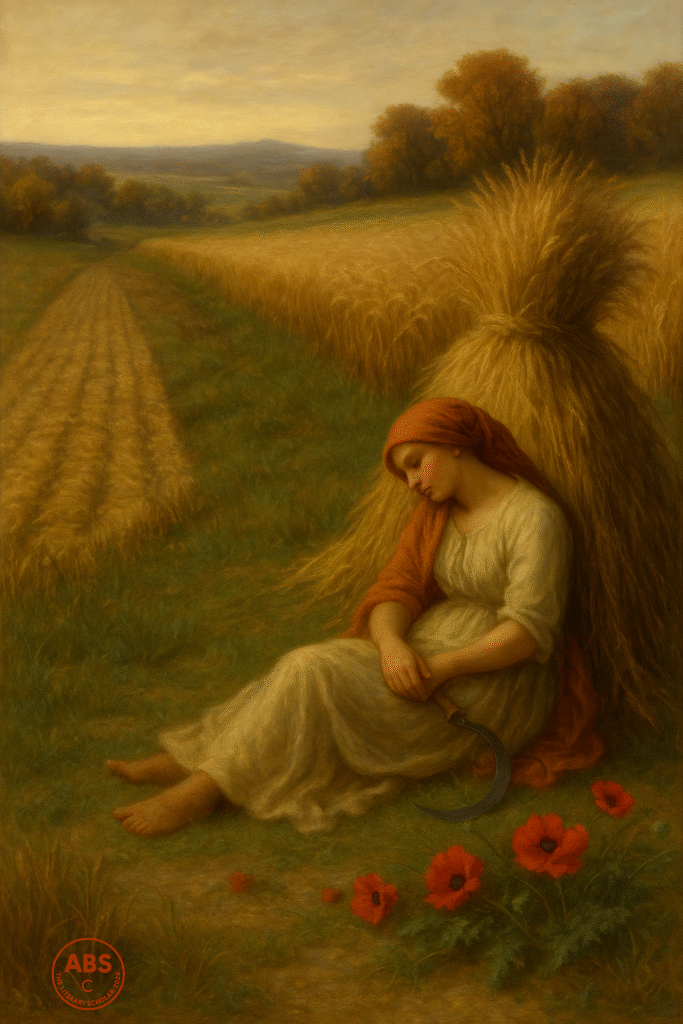
“Sitting careless on a granary floor,
Thy hair soft-lifted by the winnowing wind…”
Yes. Keats personifies Autumn as a dreamy farmhand, possibly intoxicated by cider fumes, just letting the wind style its hair.
Let’s break it down:
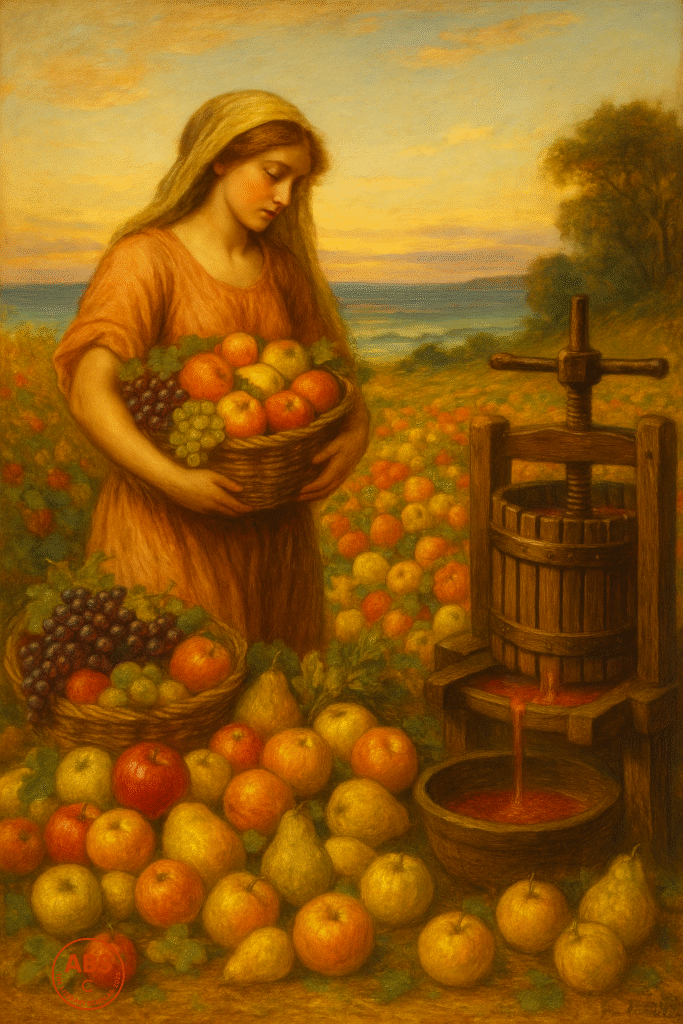
Autumn as the Ripener – The one helping apples get plump and sun-blushed.
Autumn as the Gleaner – Carrying bundles like a poetic laborer in a sepia painting.
Autumn as the Winnower – Gently tossing grain, doing absolutely nothing in a hurry.
“Or by a cyder-press, with patient look…”
If Autumn had an Instagram, this line would be the bio.
Stanza Three: The Soundscape of Seasonal Exit
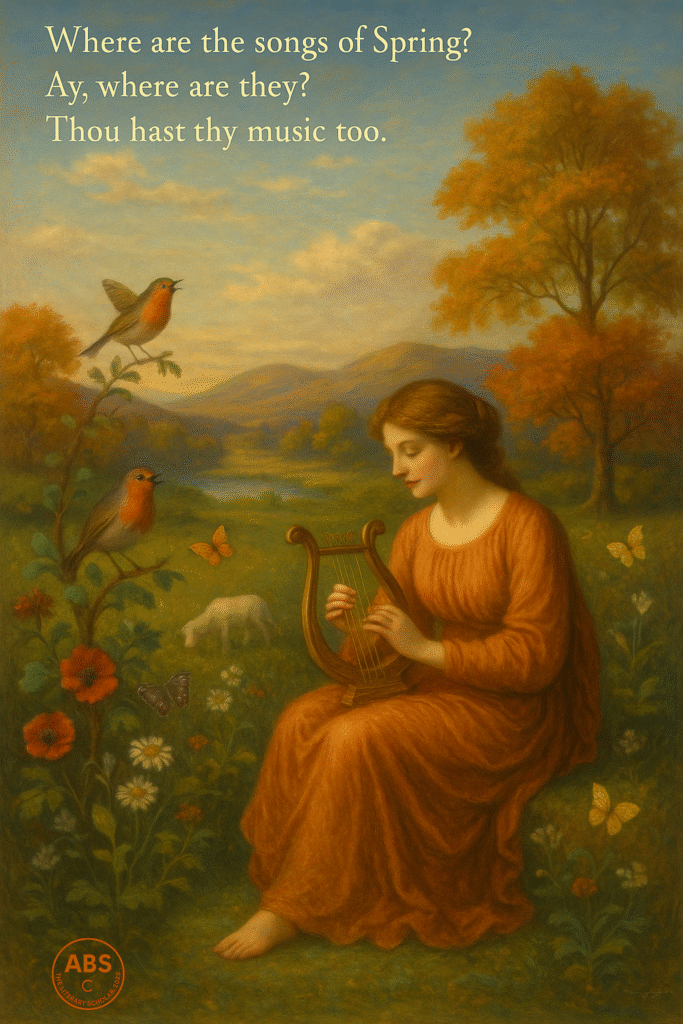
“Where are the songs of Spring? Ay, where are they?”
Keats throws shade at spring like a moody sibling:
“Oh, Spring’s off gallivanting again with her daffodils? Cute. Meanwhile, Autumn has a soundtrack too.”
“Thou hast thy music too…”
And what is Autumn’s playlist?
The choir of gnats doing death-metal circles over the brook
The full-grown lambs bleating like farm philosophers
The robin hopping through hedges like a soloist in corduroy
The crickets who have clearly been waiting all year to headline
“And gathering swallows twitter in the skies.”
Nature’s final tweet before it logs off for winter.
Modern Take: Autumn as a Mood, a Meal, and a Metaphor
This isn’t a poem. It’s an aesthetic. Keats gives us all five senses wrapped in a hay-scented, bee-buzzed burrito:
Sight: Golden light, swollen fruit, dusty barns.
Sound: Crickets, bleats, buzzing, whispering wind.
Taste: Apples so ripe they probably made the orchard blush.
Touch: Soft hair, winnowing breezes, the crunch of grain.
Smell: Spiced air, fermented fruit, warm decay.
This is the season of slow surrender. But Keats doesn’t mourn. He luxuriates.
Because Autumn doesn’t rage like winter. It ripens, rests, and releases.
Witty Echoes and ABS Interpretations
“Season of mists and mellow fruitfulness…”
Or as modern influencers call it: Pumpkin Spice Latte weather.
“Thou watchest the last oozings, hours by hours.”
This line smells like patience and cider. And low blood sugar.
“Thou hast thy music too…”
Subtext: Don’t come for me, Spring. I’ve got bee symphonies and robin remixes.
Why This Ode Still Glows Like Apple Skins in Sunlight
Because decay has never looked so delicious.
Because personification never felt this drowsy and divine.
Because Keats could turn seasonal depression into poetic seduction.
And because Autumn, once touched by Keats, never leaves quietly again.
The Literary Scholar folds the scroll beneath falling leaves, where the sun lingers a little longer and the bees buzz like they’re writing stanzas of their own.