
How Narrators Shape, Shade, and Sometimes Sabotage the Truth
ABS Beliefs
ABS believes narrators are never innocent.
They choose what to remember, what to forget, and what to forgive themselves for.
Some speak to confess, some to impress, and some simply to survive their own memories.
This scroll exists because trusting a voice is easy, but questioning it is where literature begins.
“Trust me, I’m lying. Unreliable narrators who outsmart even smart readers.”
That sentence deserves to sit at the door of this scroll like a warning sign everyone ignores. Because the truth is uncomfortable and slightly embarrassing. Intelligence does not protect readers from being fooled. In fact, it often makes them easier targets. Smart readers love articulate voices. They admire control, irony, self awareness, and verbal elegance. Narrators know this. Literature knows this. And that is exactly where the trap is set.
Every story begins with a voice asking for trust. Not demanding it. Just assuming it. The narrator steps forward and says, calmly, confidently, sometimes charmingly, this is how it was. And we agree to listen. We rarely pause to ask why this voice gets the microphone, or what it gains by holding it. Fiction depends on this agreement. But great fiction quietly questions it.
This scroll brings together narrators from multiple genres because deception does not belong to one tradition alone. Gothic novels whisper secrets through candlelit corridors. Moral autobiographies speak in the language of growth and virtue. Social novels soften cruelty with humor and sentiment. Modernist texts fracture time and thought until truth feels optional. Psychological realism jokes its way through pain. Political and allegorical narratives present personal voices as historical testimony. Different shelves. Same problem. A single voice explaining too much.
The Gothic narrator tells us they are only recording strange events, while their fears bleed into every sentence. The moral narrator insists experience has refined their conscience, while conveniently explaining away earlier damage. The social narrator describes suffering with a smile, because survival sounds better than injury. The modernist voice floats through memory and sensation, making confusion feel profound rather than alarming. The adolescent narrator mocks the world so relentlessly that we forget to ask who taught them to be this angry. The political narrator speaks in measured tones about systems and empires, while horror hides inside beautifully phrased reflections.
Across all these genres, narrators perform the same quiet magic trick. They turn perspective into authority.
Readers fall for it because narrators sound like us. They hesitate. They justify. They confess just enough to seem sincere. They say things like “I am trying to tell this as truthfully as I can,” which should immediately raise suspicion. Literature has always known what psychology later confirmed. Memory is selective. Self explanation is defensive. Language is never innocent.
Some narrators are likable. Some are polite. Some are wounded. Some are brilliant. Some are unbearably funny. Humor is especially dangerous. We trust people who make us laugh. We assume wit equals honesty. A narrator who entertains us feels generous, almost intimate. We forget that comedy can be camouflage. As one famous voice casually remarks, “People never notice anything,” and we nod along, pleased with our own insight, unaware that we are the ones being noticed.
This scroll is not interested in catching narrators in lies like a courtroom drama. That would be crude. It is interested in how narrators arrange truth so that it remains livable. What they emphasize. What they repeat until it sounds reasonable. What they describe beautifully so we stop questioning it. What they omit because silence is safer.
Victorian narrators often speak from adulthood, looking back at childhood with a tone of calm reflection. Growth has occurred. Lessons have been learned. But growth has a price. Pain becomes character building. Neglect becomes experience. Cruelty becomes unfortunate necessity. Modernist narrators fracture thought and time, offering interior truth instead of external certainty. But interior truth can be just as evasive. Political narrators frame personal experience as representative history, while quietly editing responsibility. Gothic narrators insist on horror outside themselves, refusing to notice what originates within.
What unites all these voices is not deceit, but self preservation. Narrators speak in order to live with what they have done, what they have seen, or what they have failed to prevent. They narrate because silence would expose something raw and unresolved. And readers listen because stories promise meaning, and meaning is comforting.
Smart readers like to believe they are immune. They recognize irony. They admire complexity. They detect symbolism. Yet they still trust tone. They still admire confidence. They still mistake eloquence for transparency. That is why unreliable narrators continue to succeed. Not because readers are foolish, but because readers are human.
This scroll moves across genres to show how different literary traditions solve the same psychological problem. How to tell a story without fully indicting oneself. How to sound honest without being complete. How to make the reader complicit through sympathy, laughter, or admiration.
By the end, the goal is not to distrust literature. It is to read it more alertly. To hear a voice and ask, gently but firmly, why this version, why this tone, why now. Because the most dangerous narrators are not the obviously mad ones. They are the reasonable ones. The charming ones. The ones who sound like they know exactly what they are doing.
And those are the ones who fool even the smartest readers.
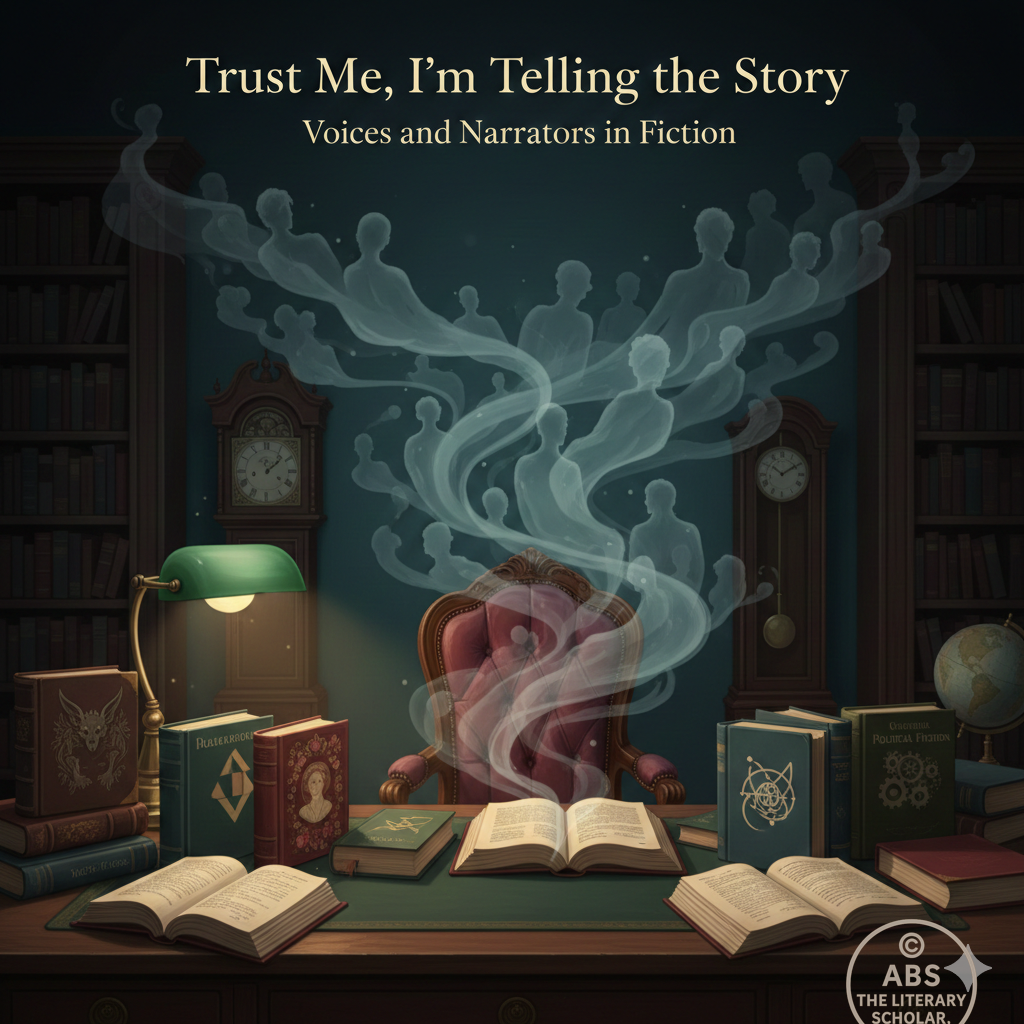
LIST OF GENRES / TYPES OF NARRATORS
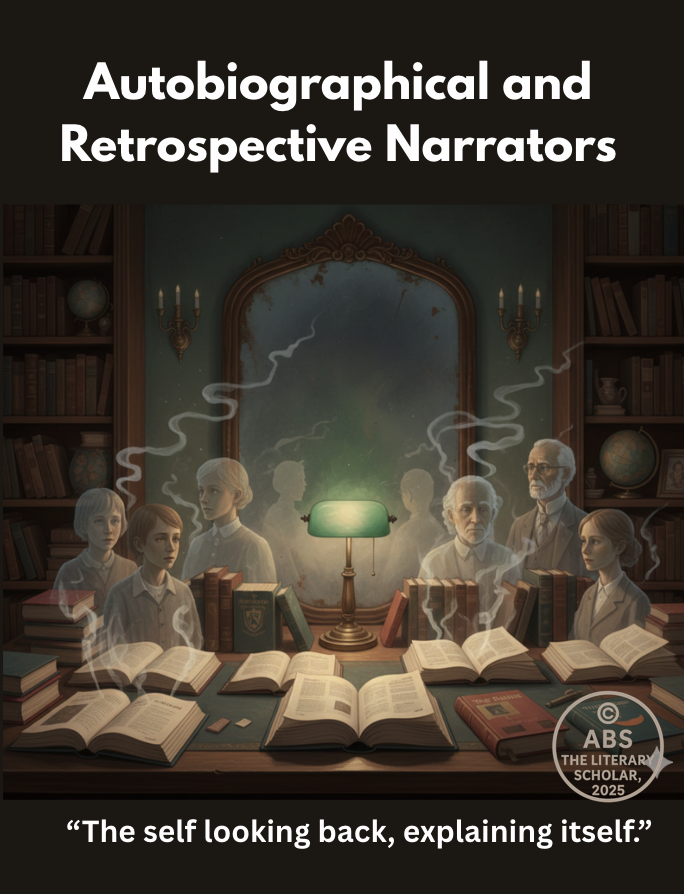
Autobiographical and Retrospective Narrators
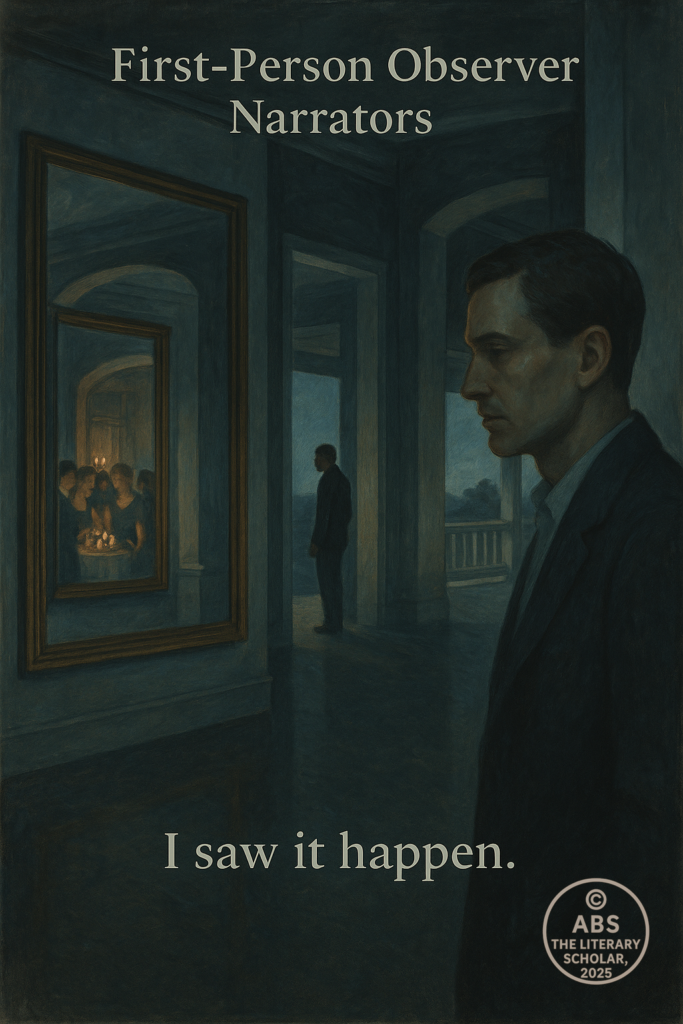
First-Person Observer Narrators
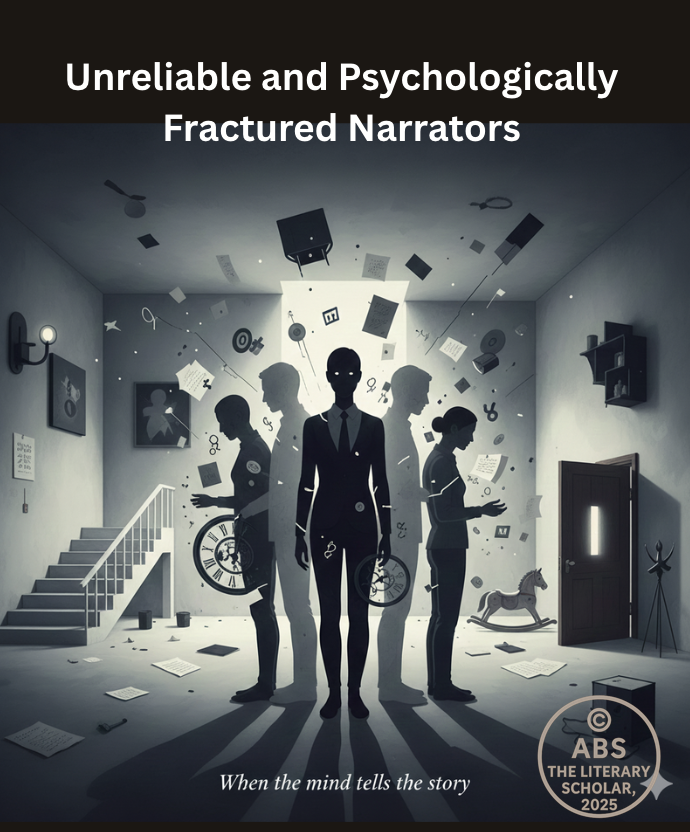
Unreliable and Psychologically Fractured Narrators
Gothic, Confessional, and Epistolary Narrators
Moral and Ethical Narrators
Modernist and Stream-of-Consciousness Narrators
Political, Dystopian, and Allegorical Narrators
PART 1
Autobiographical and Retrospective Narrators**
Novels covered under this genre
Jane Eyre
David Copperfield
Great Expectations
Moll Flanders
Robinson Crusoe
A Portrait of the Artist as a Young Man
The Sense of an Ending
The Bell Jar
Invisible Man
Native Son
The White Tiger
These narrators all have one thing in common.
They speak after survival.
And survival changes tone.
“I lived through it. Now let me explain what it meant.”
That single sentence could introduce every autobiographical narrator ever written.
Autobiographical and retrospective narrators do not tell stories as events unfold. They tell them after the dust has settled, after identity has stabilized, after pain has found language. The voice comes to us calm, reflective, almost wise. Which is exactly why we trust it.
But hindsight is not truth.
Hindsight is editing.
Jane Eyre
Jane speaks with moral clarity. Adult Jane looks back and assures us that everything she endured had purpose. Her suffering becomes selfhood. Her restraint becomes virtue. Her endurance becomes destiny.
What sounds like strength is also selection.
Jane tells us what she learned. She does not linger on what obedience cost her. The narration insists on dignity, and dignity quietly edits anger.
David Copperfield
David survives neglect, labor, emotional abandonment, and loss. But adult David tells the story with warmth, humor, and affectionate nostalgia.
Pain is softened into character building.
The past is no longer raw. It is shaped. The voice reassures us that everything worked out. That reassurance is comforting. It is also suspicious.
“We forgive narrators easily when they sound healed.”
Great Expectations
Pip narrates with embarrassment and hindsight. He knows he was foolish. He knows he was snobbish. He admits this freely.
But notice the move.
Admitting weakness replaces admitting responsibility.
Regret becomes redemption.
The adult voice forgives the younger self generously, and readers follow suit.
Moll Flanders
Moll narrates her life like a legal defense mixed with a confession. She tells us her sins, yes, but always with explanation.
Circumstances. Necessity. Survival.
Confession becomes justification.
By the time repentance arrives, the story has already made its case.
Robinson Crusoe
Crusoe presents isolation as enterprise, conquest as order, survival as moral superiority.
The voice is calm, practical, instructional.
Colonial confidence sounds like common sense when it narrates itself.
The autobiography never doubts its right to narrate the world as possession.
“Autobiography often turns damage into destiny.”
A Portrait of the Artist as a Young Man
Stephen’s narrative grows alongside his consciousness. Language matures. Thought sharpens. Identity crystallizes.
But growth itself becomes the justification.
Leaving becomes necessary. Detachment becomes art.
The narration never asks who is abandoned along the way.
The Sense of an Ending
This is retrospection stripped bare.
Memory hesitates. Revises. Contradicts itself.
“I remember, but I may be wrong.”
Here, unreliability is quiet, ordinary, terrifyingly familiar. The narrator does not lie. He simply remembers in ways that protect him.
The Bell Jar
Esther narrates from the edge of recovery. Language returns. Structure returns.
But sanity narrates madness.
Distance turns breakdown into a story with shape.
The narration implies survival means understanding. But survival does not always equal explanation.
Invisible Man and Native Son
Here autobiography becomes social testimony.
The voice speaks not only for the self, but for a system that produced it.
Identity is narrated under pressure.
Personal experience carries political weight, and retrospection becomes both revelation and accusation.
Why this genre fools even smart readers
Because it sounds reasonable.
Because it sounds reflective.
Because it sounds finished.
Autobiographical narrators do not ask for belief. They offer interpretation.
And interpretation feels like truth.
But every retrospective narrator shares a quiet impulse.
To make the past livable.
To make the self coherent.
To make survival sound meaningful.
“The story makes sense now.”
That sentence should never be the end of reading.
It should be the beginning of doubt.
PART 2
First-Person Observer Narrators**
Novels covered under this genre
The Great Gatsby
Heart of Darkness
Lord Jim
A Passage to India
The Go-Between
Rebecca
These narrators begin with a clever disclaimer.
This is not my story. I only witnessed it.
And that, right there, is the lie that opens the door.
“I was only watching.”
First-person observer narrators survive on this sentence. They stand close enough to see everything, yet far enough to avoid blame. They are not the heroes, not the villains, not the ones who acted decisively. They were there. They noticed. They remember. And memory, when it does not belong to the center of the storm, becomes a very convenient shelter.
Observer narrators appear modest. They step aside, allowing someone else to dominate the stage. They insist they are simply recording events, not shaping them. This apparent humility is deeply persuasive. Readers trust witnesses. Courts rely on them. History is built on them. But literature, once again, knows better.
Because watching is never neutral.
The Great Gatsby
Nick Carraway begins with a moral résumé. He tells us he is tolerant, reserved, inclined to withhold judgment. This introduction is not casual. It is strategic.
Nick watches extravagance, obsession, moral decay, and emotional wreckage from a position of apparent restraint. He tells us he is different. That difference gives him authority.
But admiration slips in quietly.
Gatsby becomes larger than life because Nick needs him to be. Disgust with the world sharpens because Nick frames it that way. The observer becomes the filter through which glamour and emptiness coexist.
“I was within and without.”
That line sounds wise. It is also an excuse.
Heart of Darkness
Marlow does not tell a story. He performs reflection.
He watches imperial brutality, moral collapse, and unspeakable violence. But he narrates them through language so layered, so thoughtful, so aesthetic, that horror begins to sound philosophical.
Distance becomes decoration.
Marlow insists he is only recounting what he saw, but the telling is everything. Silence, hesitation, metaphor, all soften responsibility.
The observer speaks as though contemplation absolves involvement.
“I am telling you what I saw, not what I did.”
Lord Jim
Here the observer narrator becomes obsessed.
Marlow again, circling Jim’s single moment of failure like a man trying to solve a personal riddle. Jim’s cowardice is analyzed, reinterpreted, romanticized.
Judgment is delayed indefinitely.
The observer is no longer neutral. He is invested. He needs Jim to mean something. The story becomes less about Jim’s act and more about Marlow’s need to understand honor without destroying hope.
Watching turns into advocacy.
A Passage to India
This observer narrative is quieter, colder, more unsettling.
Voices attempt to explain cultural collision, misunderstanding, and accusation. Observation here pretends to be fairness.
But fairness itself is selective.
What is seen is shaped by power, by position, by who gets to narrate confusion and who is reduced to it.
The observer believes distance equals objectivity.
It rarely does.
The Go-Between
Leo watches adult desire without understanding it. Later, he narrates it without fully confronting its damage.
Innocence becomes narrative protection.
“I did not know what it meant then.”
This sentence appears again and again in observer narration. It softens consequences. It excuses silence. It transforms harm into tragedy rather than accountability.
Rebecca
The unnamed narrator watches a marriage, a house, a memory that refuses to die.
She observes power without naming it. She narrates insecurity as devotion. She mistakes silence for safety.
Watching becomes self-erasure.
By the time she speaks with confidence, the story has already trained us to accept her version.
“Observer narrators rarely lie. They justify distance.”
Why this genre works so well on readers
Because it flatters us.
Observer narrators make readers feel intelligent. We are invited to notice. To infer. To read between lines. We feel clever assembling meaning from what the narrator claims not to judge.
But observation is already a choice.
What is watched.
What is ignored.
What is framed as significant.
All of it belongs to the narrator.
First-person observers do not act, but they interpret action, and interpretation is power.
They give us the illusion of freedom while guiding every conclusion.
“The most persuasive narrators are the ones who insist they are not responsible.”
In observer narration, the voice steps aside just enough to avoid accusation, yet stays close enough to control the story. The narrator survives with clean hands and a heavy influence.
They leave us believing we saw the truth for ourselves.
And that is their greatest success.
PART 3
Unreliable and Psychologically Fractured Narrators**
Novels covered under this genre
Notes from Underground
The Catcher in the Rye
We Have Always Lived in the Castle
Lolita
The Curious Incident of the Dog in the Night-Time
The Sound and the Fury
As I Lay Dying
Beloved
These narrators do not stand at a safe distance.
They are the disturbance.
“Trust me, I know what I’m talking about.”
That sentence, when spoken by a fractured mind, should immediately trigger alarm. Yet readers lean in closer instead. Psychological narrators fascinate us because they sound raw, exposed, unfiltered. We confuse emotional intensity with honesty. We assume that because a voice is unstable, it must be sincere.
That assumption is where literature smiles quietly and sharpens the knife.
Unreliable and psychologically fractured narrators do not merely tell stories. They leak them. Thought spills onto the page without order, without proportion, without moral calibration. These narrators are not editing memory for elegance. They are drowning in it. And drowning voices are persuasive because they feel urgent.
But urgency is not accuracy.
Notes from Underground
This narrator announces his sickness immediately. He mocks himself. He confesses his pettiness. He dissects his own motives with surgical cruelty.
And that is the trap.
Self awareness becomes performance.
The Underground Man knows everything about himself except how to stop. He weaponizes intelligence to justify paralysis. His honesty feels radical. His logic feels airtight.
“I am a sick man.”
Yes. And a convincing one.
The Catcher in the Rye
Holden Caulfield narrates like a stand up routine held together by grief.
He jokes. He exaggerates. He judges relentlessly.
Humor becomes camouflage.
Holden notices phoniness everywhere except in his own despair. His unreliability is not calculated. It is emotional overflow. He speaks so fast because silence might catch him.
Readers laugh. That laughter builds trust.
And trust blinds us to breakdown.
“It was the phoniest thing I ever saw.”
He says this about the world. He never asks it about himself.
We Have Always Lived in the Castle
Merricat speaks softly, sweetly, ritualistically.
She sounds harmless.
That is deliberate.
Her narration is controlled delusion. Repetition replaces reason. Superstition replaces causality.
Innocence becomes insulation.
Readers play along because the voice feels childlike. Childlike voices disarm suspicion.
This is one of literature’s coldest tricks.
Lolita
Here unreliability reaches its most dangerous elegance.
The narrator is brilliant, articulate, ironic, self aware. He admits his crime while narrating it beautifully.
Language becomes anesthesia.
The reader is seduced not by the act, but by the sentence.
“You can always count on a murderer for a fancy prose style.”
The line tells the truth. The prose makes us forget it.
The Curious Incident of the Dog in the Night-Time
This narration insists on logic, structure, clarity.
Emotion is confusing. Facts feel safe.
Precision becomes distortion.
The narrator tells us exactly what he sees, and nothing of what he feels. The gaps are enormous. The reliability is technical, not emotional.
Readers trust lists, diagrams, measurements.
But life does not happen in bullet points.
The Sound and the Fury and As I Lay Dying
Here narration fractures completely.
Multiple voices. Disrupted time. Collapsing syntax.
Reality is no longer singular.
These narrators do not explain. They experience. Meaning must be assembled from chaos.
Readers work harder here, and effort creates loyalty. We believe what we struggle to understand.
But fragmentation does not guarantee truth. It only guarantees immersion.
Beloved
Memory becomes haunted.
The past refuses order. Trauma resists grammar.
Silence speaks as loudly as language.
The narration circles pain rather than confronting it directly. Gaps matter more than statements.
Here unreliability is not deception. It is survival.
“Some things are too terrible to tell straight.”
Why this genre seduces readers
Because it feels authentic.
These narrators do not sound composed. They do not sound edited. They sound like thoughts we recognize but rarely admit.
We trust them because they suffer.
But suffering does not clarify truth. It distorts it.
Psychologically fractured narrators show us not what happened, but how it felt, and feeling often overrides fact.
“When the mind becomes the narrator, reality becomes negotiable.”
This genre forces readers to confront an uncomfortable idea.
A voice can be emotionally honest and factually unreliable at the same time.
And that realization lingers long after the book is closed.
PART 4
Gothic, Confessional, and Epistolary Narrators**
Novels covered under this genre
Wuthering Heights
The Turn of the Screw
Frankenstein
Dracula
Dr Jekyll and Mr Hyde
The Picture of Dorian Gray
These narrators do not simply tell stories.
They unburden themselves.
“I must tell someone what I have seen.”
That sentence sits at the heart of Gothic and confessional narration. These voices speak because silence has become unbearable. Letters are written. Journals are kept. Testimonies are recorded. Not for art, not for clarity, but for psychological relief.
Gothic narrators are driven by fear, guilt, obsession, and secrecy. Their worlds are filled with locked rooms, unfinished sentences, interrupted confessions. The form itself mirrors anxiety. Fragmented documents. Multiple narrators. Accounts that overlap but never quite agree.
Truth arrives in pieces. And pieces can always be rearranged.
Wuthering Heights
This novel hides its violence inside storytelling layers.
Lockwood observes. Nelly explains. Everyone justifies.
The truth never speaks directly.
Passion is filtered through discomfort. Cruelty is softened by routine. Obsession is narrated by those who fear it. The Gothic energy does not come from ghosts, but from voices that refuse to own what they witnessed.
The Turn of the Screw
Here, confession pretends to be protection.
The narrator insists on moral duty, on vigilance, on care. The voice is calm. Certain. Controlled.
Certainty becomes the danger.
Because every interpretation is filtered through fear. The narration never doubts itself, and that is precisely what unsettles us. The reader is trapped inside a voice that believes righteousness excuses everything.
“I was responsible for their safety.”
A sentence that sounds noble.
A sentence that silences doubt.
Frankenstein
This is confession layered inside confession.
Victor speaks to justify. The creature speaks to be heard. Letters frame both.
Everyone wants absolution.
Each voice explains itself passionately, eloquently, persuasively. Responsibility passes from hand to hand like a cursed object. The Gothic horror lies not in creation, but in narration itself.
Who tells the story first controls sympathy.
Dracula
Here narration becomes surveillance.
Diaries. Letters. Logs. Records.
Everything is documented to maintain control.
Fear is managed through documentation.
The form promises objectivity, but emotion bleeds through margins. The more evidence accumulates, the more panic leaks into language. The Gothic threat fractures the narrators’ belief in reason.
Dr Jekyll and Mr Hyde
Confession arrives too late.
The narrative withholds until collapse is inevitable.
Secrecy becomes structure.
Letters replace explanation. Silence becomes plot. The narrator believes that not speaking preserves order, until it destroys it instead.
The Picture of Dorian Gray
Here confession is aesthetic.
The narrator lingers on beauty, charm, wit.
Corruption hides behind elegance.
The voice observes decay indirectly, admiring surfaces while avoiding consequences. The Gothic horror lives in what remains unsaid.
“Some truths are easier to write than to admit.”
Why this genre unsettles readers
Because confession sounds sincere.
We associate confession with honesty, journals with authenticity, letters with intimacy. But Gothic narrators confess selectively. They reveal just enough to survive. They document in order to control panic. They speak to soothe themselves.
These narrators are not unreliable because they invent.
They are unreliable because fear shapes their language.
“When fear narrates, clarity disappears.”
Gothic and confessional narrators teach readers a hard lesson.
Writing something down does not make it true.
Recording events does not remove guilt.
And telling a story does not equal understanding it.
They speak because they must.
Not because they are ready.
PART 5
Moral and Ethical Narrators
Novels covered under this genre
The Good Soldier
The Remains of the Day
Pamela
Clarissa
Tess of the d’Urbervilles
The Mayor of Casterbridge
These narrators do not sound dangerous.
That is the problem.
“I tried to do the right thing.”
Few sentences feel safer than this one. Moral and ethical narrators speak in the language of principle, duty, conscience, and propriety. They believe deeply in goodness. Or at least in appearing good. Their voices are measured, restrained, often painfully sincere. Readers trust them almost instinctively, because morality sounds like truth.
But morality is not neutrality.
It is a position.
Moral narrators explain the world through ideas of right and wrong. They narrate not just events, but justifications. They tell us why something had to be done, why silence was preferable to chaos, why restraint mattered more than feeling. Their stories feel orderly, even when lives unravel inside them.
What they offer is not fact alone, but moral interpretation.
The Good Soldier
John Dowell speaks with politeness so consistent that readers mistake it for honesty. He insists on innocence. On ignorance. On not understanding what was happening around him.
Moral blindness disguises itself as decency.
Dowell does not lie aggressively. He narrates passively. He withholds judgment and calls it fairness. He fails to act and calls it virtue. His ethical language becomes a shield against responsibility.
“I am a dull fellow.”
The sentence sounds harmless. It is devastating.
The Remains of the Day
Stevens narrates with dignity as though dignity itself were a moral achievement.
Duty becomes identity. Loyalty becomes virtue. Silence becomes professionalism.
Emotion is treated as a threat to order.
The narration is immaculate. The language controlled. And beneath that control, a life quietly collapses. Stevens does not deceive us. He convinces himself that restraint equals goodness.
Readers admire his composure. That admiration delays recognition.
Pamela and Clarissa
Here morality speaks in letters.
Virtue narrates itself endlessly. Every action is examined. Every feeling justified. Every boundary documented.
Goodness becomes performance.
These narrators believe that explaining their virtue protects it. The constant narration of morality becomes both shield and spectacle. Readers are meant to admire consistency, but consistency can also mean obsession.
“I must behave rightly.”
The sentence repeats until it replaces complexity.
Tess of the d’Urbervilles
Tess does not narrate with confidence. But moral narration surrounds her.
Judgment speaks louder than experience.
Her story shows how ethical frameworks imposed by others distort truth. Morality becomes a system that explains suffering instead of preventing it.
Purity becomes punishment.
The narrative asks readers to question not Tess, but the moral language used to contain her.
The Mayor of Casterbridge
Here ethical narration becomes tragic.
A single moral failure defines a life. Repentance follows. Discipline follows. Control follows.
Character is treated as destiny.
The narrator frames downfall as consequence, order restored through suffering. Responsibility is acknowledged, but forgiveness remains elusive. Morality structures the narrative so tightly that escape feels impossible.
“He paid for his mistake.”
The sentence sounds just. It also ends conversation.
Why this genre is so persuasive
Because moral narrators sound reasonable.
They do not shout. They do not unravel. They do not fracture language. They speak calmly, thoughtfully, often regretfully. Their restraint signals reliability. Their ethical vocabulary reassures us that someone is in control.
But moral language is powerful precisely because it limits inquiry.
When narrators frame actions as duty, readers stop asking about desire.
When silence is called dignity, readers stop questioning harm.
When restraint is praised, loss becomes invisible.
Moral narrators do not distort facts aggressively. They organize them ethically.
“Good intentions make excellent blindfolds.”
This genre teaches readers a subtle lesson.
Goodness can be narrated.
Virtue can be shaped.
And ethical certainty can be as misleading as emotional chaos.
Moral and ethical narrators rarely ask whether their values cost someone else dearly. They ask only whether they behaved properly.
And readers, comforted by order, often agree.
PART 6
Modernist and Stream of Consciousness Narrators
Novels covered under this genre
-
Mrs Dalloway
-
To the Lighthouse
-
Ulysses
These narrators do not explain.
They flow.
“What if the story is not what happened, but what was thought?”
That question sits at the heart of modernist narration. Here, the voice does not stand outside events, nor look back neatly with hindsight. It moves inside the mind, drifting through memory, sensation, association, and interruption. Time collapses. Logic loosens. Plot steps aside. Thought takes over.
Modernist narrators do not promise clarity. They promise access.
And access feels like truth.
In this genre, narration abandons the old assurance that stories should make sense in straight lines. Instead, meaning appears in fragments. A smell. A memory. A half finished sentence. A thought interrupted by another thought. The narrator does not summarize experience. The narrator recreates consciousness.
Readers often find this thrilling. Finally, a voice that feels real. Finally, a narrative that mirrors how the mind actually works.
But realism of thought does not guarantee reliability of meaning.
Mrs Dalloway
Clarissa walks through a single day, and her mind carries decades.
The narration glides effortlessly between past and present, between private memory and public performance. Parties, flowers, streets, and war memories coexist without hierarchy.
Thought replaces judgment.
Nothing is explained. Everything is felt. The reader is invited to experience rather than evaluate.
But immersion creates trust. And trust makes us forget to ask whose thoughts are missing, whose pain is only brushed past, whose trauma is briefly acknowledged and then floated away.
“She felt very young; at the same time unspeakably aged.”
The sentence sounds profound. It is also evasive.
To the Lighthouse
Here, narration dissolves further.
Voices shift without warning. Perspectives merge. The mind becomes landscape. Time passes almost unnoticed.
Inner life becomes the event.
Loss, love, resentment, and disappointment are not dramatized. They are absorbed. The narrator does not tell us what matters. The narrator lets consciousness decide.
This creates intimacy. It also creates blindness.
Because when everything is interior, accountability disappears.
Ulysses
This is narration pushed to its extreme.
Language breaks rules. Grammar bends. Thought races, loops, stalls, explodes.
The mind refuses discipline.
Every voice demands attention. Every sensation claims importance. Meaning must be assembled actively by the reader.
And effort creates belief.
When readers work this hard, they trust the result. They assume difficulty equals depth, complexity equals truth.
But what we are really witnessing is not reality.
We are witnessing a mind narrating itself without filters.
“History is a nightmare from which I am trying to awake.”
A line like that feels like revelation. It is also confession. The narrator is not reporting the world. He is struggling to endure it.
Why this genre feels so honest
Because it removes the narrator’s mask.
There is no moralizing. No neat explanation. No comforting closure. Thoughts appear raw, immediate, unfinished.
Readers mistake this rawness for transparency.
But raw thought is not objective. It is subjective multiplied.
Modernist narrators do not lie consciously. They simply do not organize experience. And unorganized experience still persuades. Sometimes more strongly than reasoned argument.
“When everything matters, nothing is judged.”
The hidden risk of immersion
Stream of consciousness narration invites readers to live inside another mind. That intimacy is powerful. It feels ethical. Respectful. Deep.
But immersion can also numb critique.
When we are carried by rhythm, imagery, and sensation, we stop questioning interpretation. We accept thought as truth. We confuse presence with understanding.
Modernist narration teaches us that experience does not arrive with conclusions. But it also tempts us to believe that conclusions are unnecessary.
These narrators do not claim authority.
They claim authenticity.
And authenticity is seductive.
“If it feels real, it must be true.”
That belief is the modernist gamble. Sometimes it rewards us with extraordinary insight. Sometimes it leaves us lost in beautifully articulated confusion.
Modernist narrators do not resolve the world.
They reveal its mental texture.
And in doing so, they remind us of a final, unsettling truth.
The mind is never a neutral storyteller.
PART 7
Political, Dystopian, and Allegorical Narrators**
Novels covered under this genre
The Handmaid’s Tale
Things Fall Apart
Midnight’s Children
The Trial
The Stranger
Slaughterhouse-Five
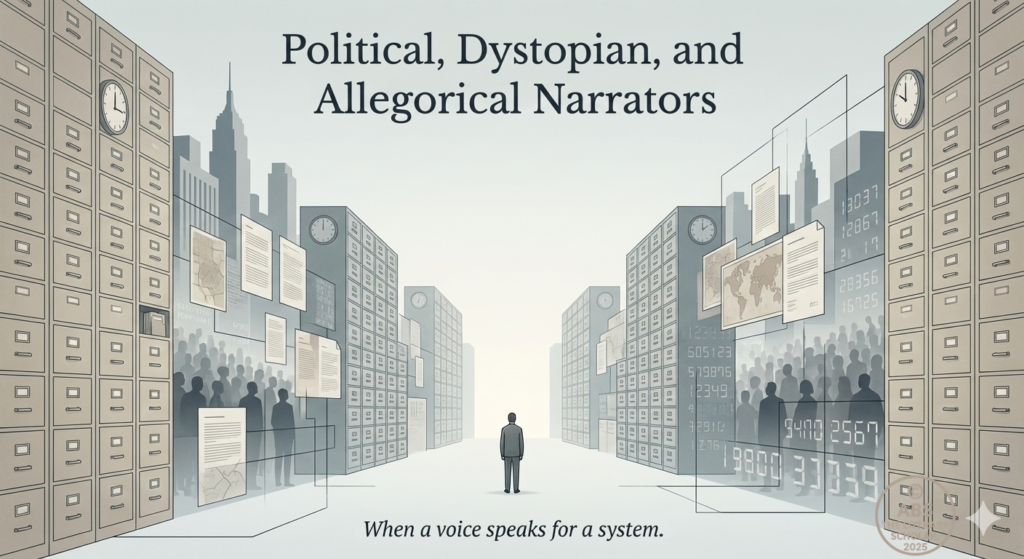
These narrators do not just tell personal stories.
They speak on behalf of a system, a nation, a crisis, a warning.
And that makes their voices powerful.
And dangerous.
“This is not just my story.”
Political and allegorical narrators speak with a double burden. They describe individual experience while quietly claiming representative authority. What happens to me, they suggest, is what happens to all of us. The personal voice becomes evidence. Memory becomes history. Narrative becomes testimony.
Readers listen carefully here, because stakes feel higher. These are not merely lives. These are structures speaking through people.
But when a system speaks through a narrator, objectivity does not improve. It becomes harder to see.
Political narrators often sound restrained, factual, even understated. Emotion is controlled. Language is measured. This restraint signals seriousness. Credibility. Moral weight.
Neutral tone becomes moral leverage.
When narrators sound calm in the middle of cruelty, readers assume truth rather than survival strategy.
The Handmaid’s Tale
The narrator speaks softly. Carefully. Almost politely.
Her voice is not loud resistance. It is recollection. Fragmented memory. Survival through attention.
Power narrates through absence.
She tells us what is allowed to be remembered. What must be whispered. What cannot be said aloud. The unreliability here is not dishonesty, but incompleteness.
“Nolite te bastardes carborundorum.”
The phrase survives because speech does not.
Things Fall Apart
Here the narrator balances tradition and change, community and collapse.
The voice feels collective. Grounded. Observant.
But cultural narration always chooses emphasis.
What is explained becomes legible. What is lost becomes inevitable.
The narration frames tragedy as collision rather than consequence. And readers must ask where sympathy settles and where responsibility dissolves.
“The world has no end, and what is good among one people is an abomination with others.”
The sentence sounds wise. It also spreads accountability thin.
Midnight’s Children
This narrator is exuberant, playful, chaotic.
History bursts into metaphor. Personal life fuses with national destiny.
Allegory replaces accuracy.
The voice claims symbolic authority. To question detail feels like missing the point. That is the narrator’s triumph.
When everything is metaphor, precision feels unnecessary.
The Trial
This narration is calm to the point of numbness.
The world is absurd, yet described plainly. Bureaucracy suffocates, but language refuses to panic.
Silence becomes compliance.
The narrator does not explain the system. He normalizes it.
Readers feel helpless because the voice does.
The Stranger
Here narration becomes emotional minimalism.
Events are reported without emphasis. Death occurs without commentary. Emotion appears inappropriate.
Detachment becomes philosophy.
Readers debate meaning endlessly, while the narrator remains unmoved. The unreliability lies in what is refused.
Feeling itself is treated as irrelevant.
“Mother died today. Or maybe yesterday.”
The line sounds simple. It rearranges the entire moral universe.
Slaughterhouse-Five
This narrator fractures time to survive trauma.
War is described through repetition, absurdity, resignation.
Irony replaces outrage.
The narrator insists that nothing can be changed. That everything has already happened. This belief shields the mind from horror.
But fatalism carries its own danger.
“So it goes.”
The phrase sounds philosophical. It anesthetizes grief.
Why this genre carries such authority
Because it speaks with consequence.
Political narrators are trusted because their stories matter. They warn. They testify. They preserve memory. They represent suffering larger than the self.
But representation is not neutrality.
When narrators speak for systems, they must simplify. They must shape chaos into coherence. And coherence always leaves something out.
“When a narrator speaks for everyone, someone disappears.”
This completes the cycle.
From the self looking back,
to the observer watching,
to the fractured mind speaking,
to confession whispering,
to morality organizing,
to thought flowing,
to systems narrating themselves.
Because the most convincing narrator is rarely the most honest one.
This completes the cycle, and it deserves to be closed slowly, deliberately, with awareness. What we have done across these seven movements is not literary categorization for its own sake. It is not a syllabus exercise. It is an act of reading against comfort.
We began with the self looking back, narrators who survive and then explain themselves. We saw how memory edits pain into meaning, how hindsight turns damage into destiny, how survival itself becomes an argument. These voices taught us the first lesson. Explanation is never innocent. When a narrator says everything makes sense now, something raw has already been left behind.
Then we moved to the observer watching. The witness who claims distance. The voice that insists it only saw, never shaped. And we learned how watching is power in disguise. How standing slightly aside allows narrators to control sympathy while keeping their hands clean. Distance does not equal neutrality. It only hides responsibility more elegantly.
From there, we entered the fractured mind speaking. Voices that spill rather than narrate. Narrators whose thoughts rush, loop, contradict, and collapse. We trusted them because they sounded honest, because pain sounded authentic. But this part taught us a harder truth. Feeling deeply does not mean seeing clearly. Emotional intensity can distort reality just as effectively as denial.
Then came confession whispering. Letters, journals, layered testimonies. Narrators who write because silence has become unbearable. Here we learned that confession is not the same as clarity. Writing something down does not make it resolved. Fear shapes language. Guilt edits memory. To confess is often to survive, not to reveal everything.
From confession we moved into morality organizing. Voices that speak of duty, propriety, restraint, goodness. Narrators who sound reasonable, ethical, calm. Perhaps the most dangerous of all. Because morality feels safe. It feels orderly. It feels final. And yet we saw how ethical language can silence harm, how dignity can erase desire, how goodness can become a blindfold. Moral certainty ends questions too early.
Then thought began flowing. Modernist minds refused to stand still. Time fractured. Memory overlapped. Consciousness became the story. We were immersed, absorbed, carried inside other minds. And we learned that intimacy can numb critique. Presence is not the same as understanding. Thought feels real, but it is still selective, still subjective, still shaped by fear, loss, and longing.
Finally, systems began narrating themselves. Political, dystopian, allegorical voices speaking calmly while carrying enormous weight. Here narration became testimony. Personal voice turned into historical warning. And we saw how representation simplifies, how speaking for many risks erasing some, how calm language can coexist with quiet violence. When a narrator speaks for everyone, someone is always missing.
Taken together, these narrators form a psychological map. Not of literature alone, but of how humans explain themselves to themselves. Each genre revealed a different survival strategy. Memory. Distance. Intellect. Confession. Morality. Immersion. Allegory. And for the reader, this journey does something subtle but lasting. It trains suspicion without cynicism. It sharpens empathy without surrendering judgment. It teaches us that listening closely matters more than believing quickly.
This scroll closes not because the subject is exhausted, but because the pattern is complete. We have seen the circle. How voices gain authority. How tone creates trust. How certainty persuades. And how questioning keeps literature alive.
Now, and only now, does the closing arrive.
ABS folds the scroll slowly, aware that every voice she trusted tonight earned that trust through craft, not innocence.
The pages close, but the habit of listening does not.
From now on, every confident I will invite a pause, not agreement.
Stories will still enchant her, but never without questions.
Because the real education was not in the books, but in learning how voices learn to sound true.


Abha Bhardwaj Sharma is a Professor of English Literature with over 30 years of teaching experience. She is the founder of Miracle English Language and Literature Institute and the author of more than 50 books on literature, language, and self-development. Through The Literary Scholar, she shares insightful, witty, and deeply reflective explorations of world literature.
Share this post / Spread the witty word / Let the echo wander / Bookmark the brilliance